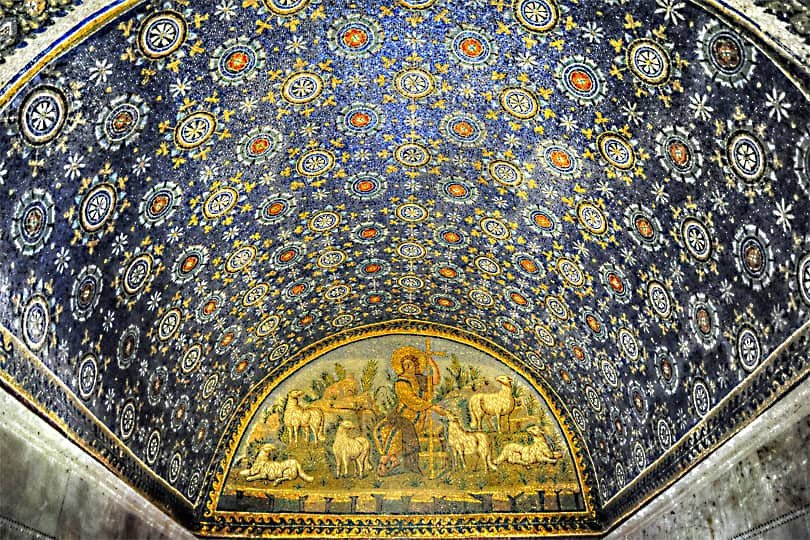
Mausoleum of Galla Placidia (daughter of Emperor Theodosius 1). The main mosaic is of Christ the Good Shepherd tending his flock. Approximately 500 AD.
If you’re an artist then you never need much of an excuse to visit Italy. Such an excuse presented itself to Margaret and me at the end of August when two Australian friends of ours got in touch and said that they were planning a trip to the country of La Dolce Vita and could we meet up for wine and pasta. How could we refuse?
A cheap flight and a few excellent Italian trains later, the four of us found ourselves in the city of Ravenna, a place that I had heard of but knew next to nothing about, except that the poet Dante lived there in the 1300s. However, our Aussie buddies, who had planned the trip meticulously, knew that Ravenna was one of these “you must see before you die” destinations of which Italy has so many. Why would that be? The answer in one word . . . Mosaics.
-
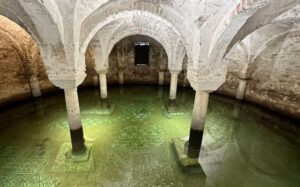
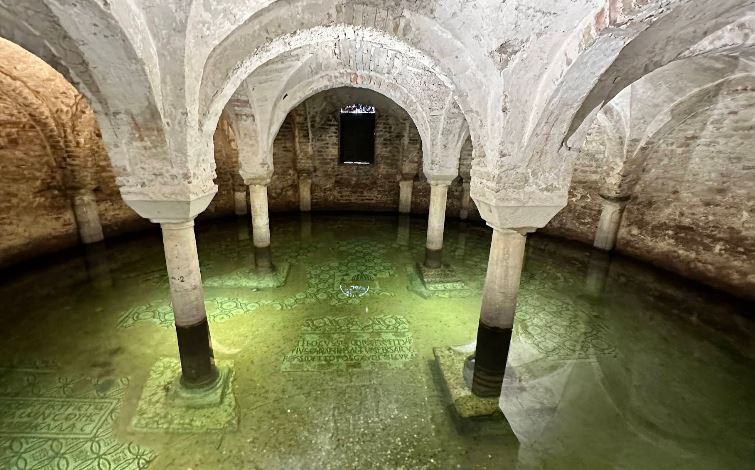
- Adjacent to Dante’s tomb is the Basilica di Francesco, where there in a subterranean chapel that you can peer into. The floor is flooded but you can see the mosaics beneath the water. Very atmospheric!
-
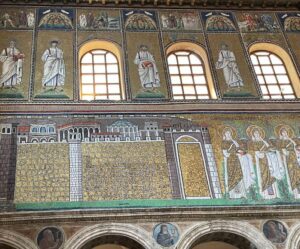
- The Basilica di Sant’Apollinare Nuovo has huge mosaic panels running the whole length of the building. Here’s a close up of one part of the mosaic.
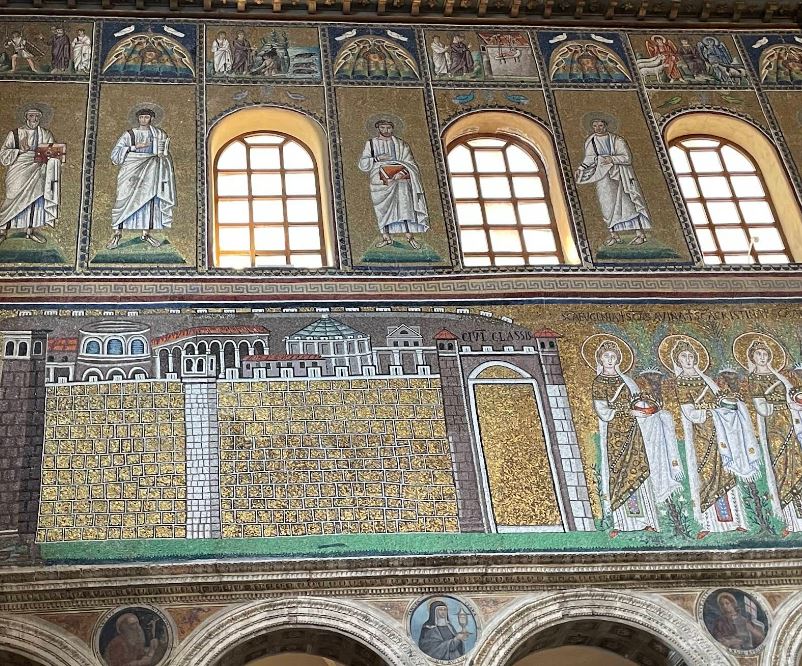
Imagine if you can that it’s the year 401AD and the current Roman Emperor is Honorius. Rome was in decline and Honorius moved the capital of the Western Roman Empire to Ravenna in that year. With a strategic location near the Adriatic Sea the city was an important port. Later, after the fall of the Roman Empire, Ravenna became the centre of Byzantine power in Italy, until the 8th century. Now, what do emperors and other rulers do in their cities in the relatively early years of Christianity? They build many mighty churches of course and decorate them lavishly. So, Ravenna today has an unparalleled collection of early Christian monuments, many of them richly decorated with mosaics. It is a place well worth a visit.
-
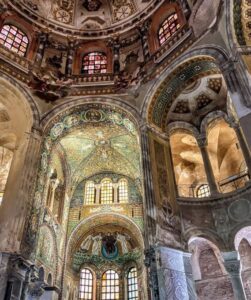
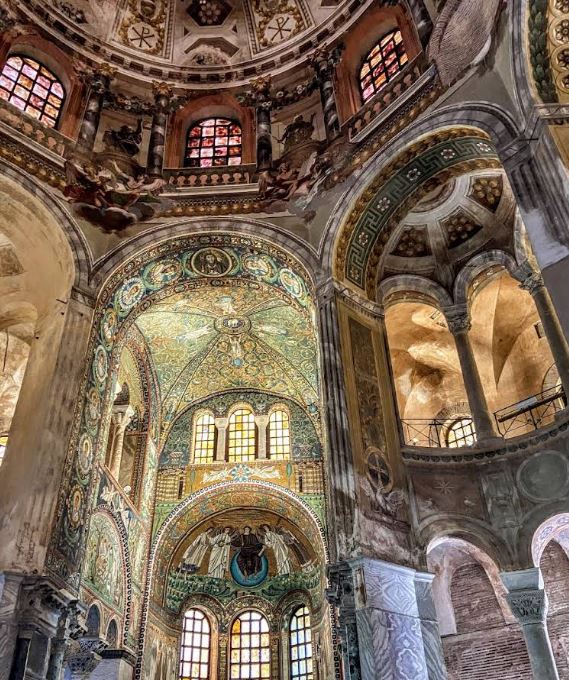
- One of the most impressive churches in Ravenna is the Basilica di San Vitali. Extensively decorated with 6th Century mosaics.
-
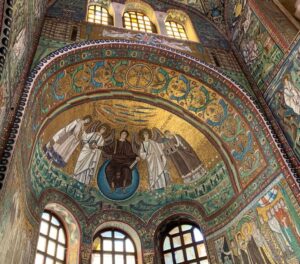
- A close up of one of the mosaics of the Basilica do San Vitali.
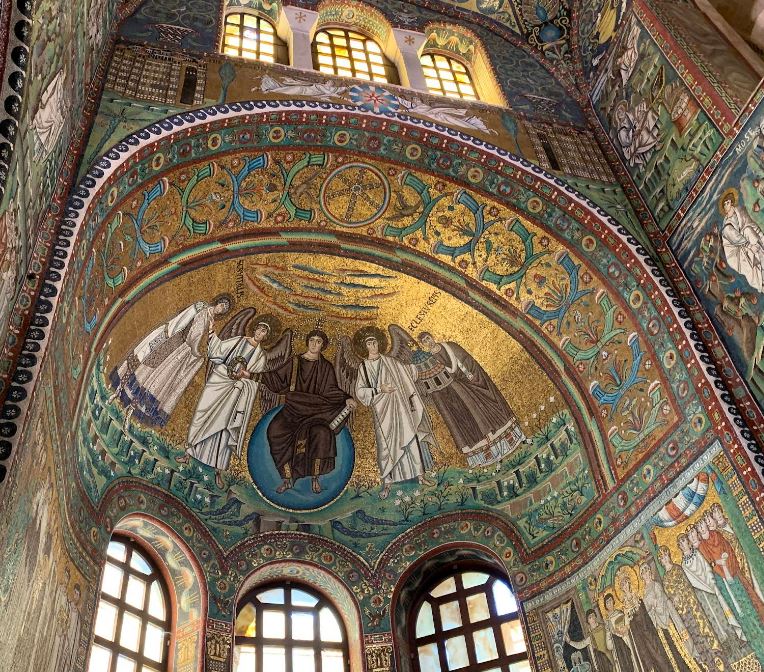
Of course you can wander around the various churches of the city, although not all of them are free to enter. But a better way is to take the ‘Mosaic Tiles’ guided tour, which is the official one that starts at the Tourist Information Point in the Piazza San Francesco. It’s best booked in advance, online at the visitravenna.it website, as the tour is popular and may be fully booked on the day. There is a pleasant and knowledgeable guide who will tell you all about the various venues, but an added bonus is that taking the tour enables you to bypass the queues that sometimes form at the most popular sites. Queues to look at mosaics? Yes, this is a Unesco World Heritage city and people come from around the world. The buildings and the scale, quality and antiquity of the decorations is quite breathtaking.
Naturally, once you have marvelled at the sights you have seen it might be time to visit one of the many cafes, bars and restaurants that abound in Ravenna. It has all the charm that you would expect from an historic Italian city and just the place in which to saunter around the old town and soak up the atmosphere.
-
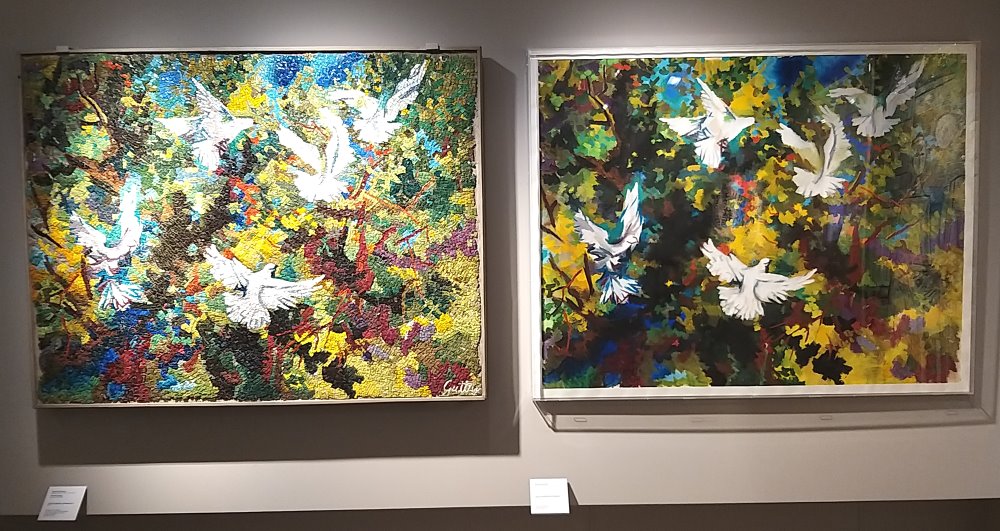
- Contemporary mosaic in the Ravenna Museo D’Arté. Renato Guttuso. On the left is the mosaic and on the right is the painting on which it is based. Dated 1958.
-
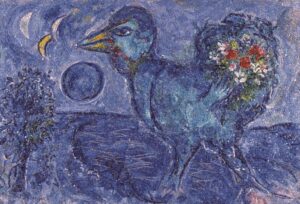
- Contemporary mosaic in the Ravenna Museo D’Arté. Marc Chagall, Le Coq Blu, late 1950s.
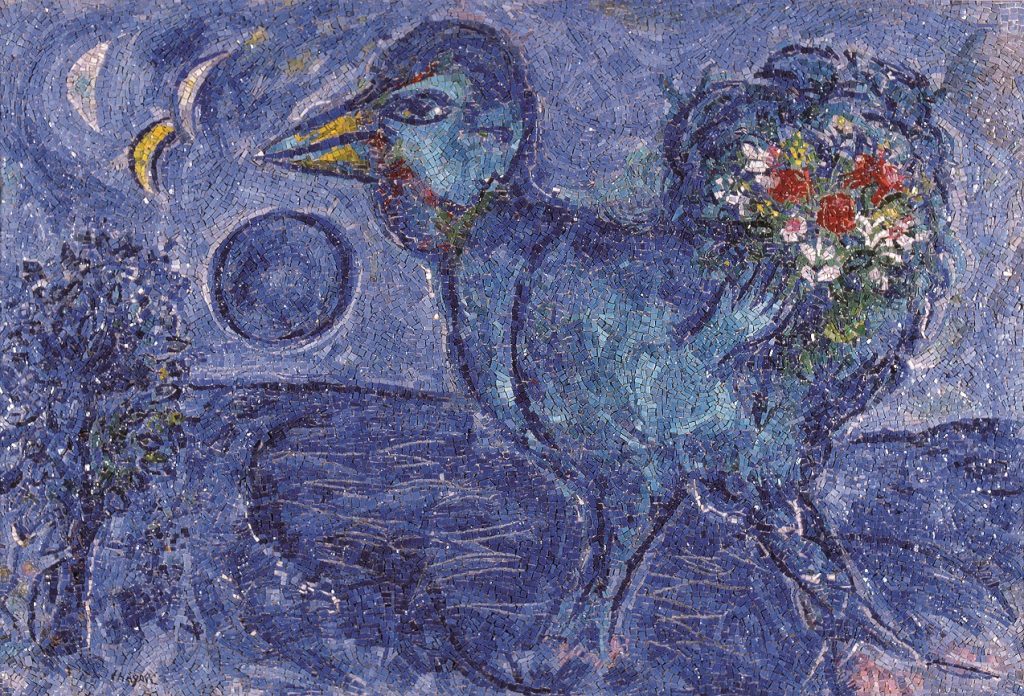
The next day the four of us visited the city’s Museo D’Arte, which again far exceeded our expectations. As well as a fine collection of paintings and sculpture by artists from around Italy and the world, a substantial part of the museum focuses on the continuing tradition of mosaics that began back in the 5th Century. It seems that there have always been mosaic artists in Ravenna, but in the 1950s the movement gathered momentum and now there are many fascinating examples of modern mosaics in a gallery within the museum. A technique often used is for an artist to create a painting and then either copy that in mosaics or a mosaicist would do so. Many of the works on display feature both the mosaic and the originating work. Fascinating artwork, and the museum is housed in a fine building, which we wandered around undisturbed by the crowds that gather at the ancient basilicas and mausoleums.
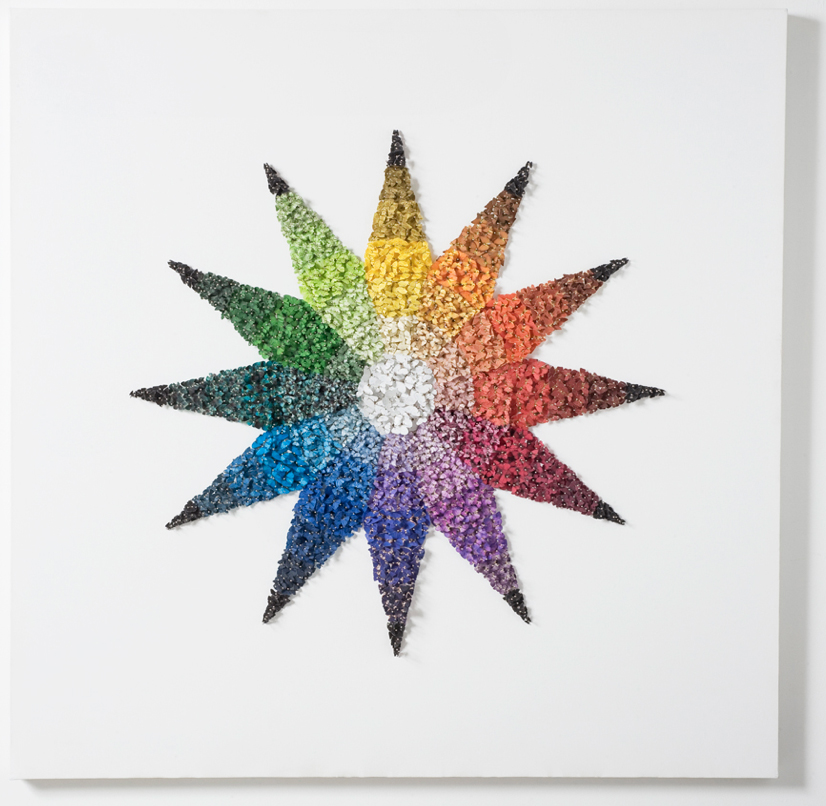
Contemporary mosaic in the Ravenna Museo D’Arté. Michael Gambino, Stella Chromatica, Dated 2013.
We can certainly recommend a visit to Ravenna, you will not be disappointed. The nearest major airport is Bologna, about an hour by train from Ravenna. We stayed at the excellent Hotel Bisanzio, where the staff are welcoming and there are pleasant rooms at a reasonable price that includes a super breakfast. It’s an easy walk from the hotel to the historic city centre and about a fifteen minute walk to the railway station. Ravenna is an opportunity to enjoy wine and pasta and some very interesting art. Buone vacanze!
Stephen Martyn