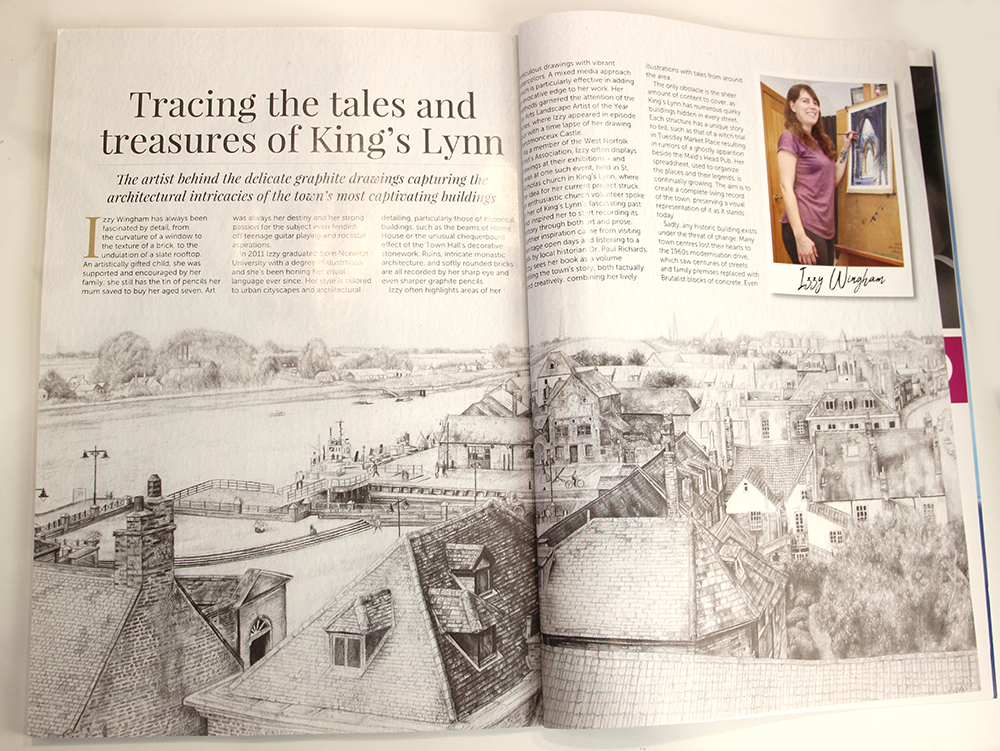
 This spring, KL Magazine contacted me with an interest to write an article on my King’s Lynn work. I am currently working on a self-initiated project, to illustrate a book about the town of King’s Lynn. It will include historical facts, stories, and details of my own personal thoughts on buildings and streets. Continue reading
Three Member Artists Exhibiting in King’s Lynn
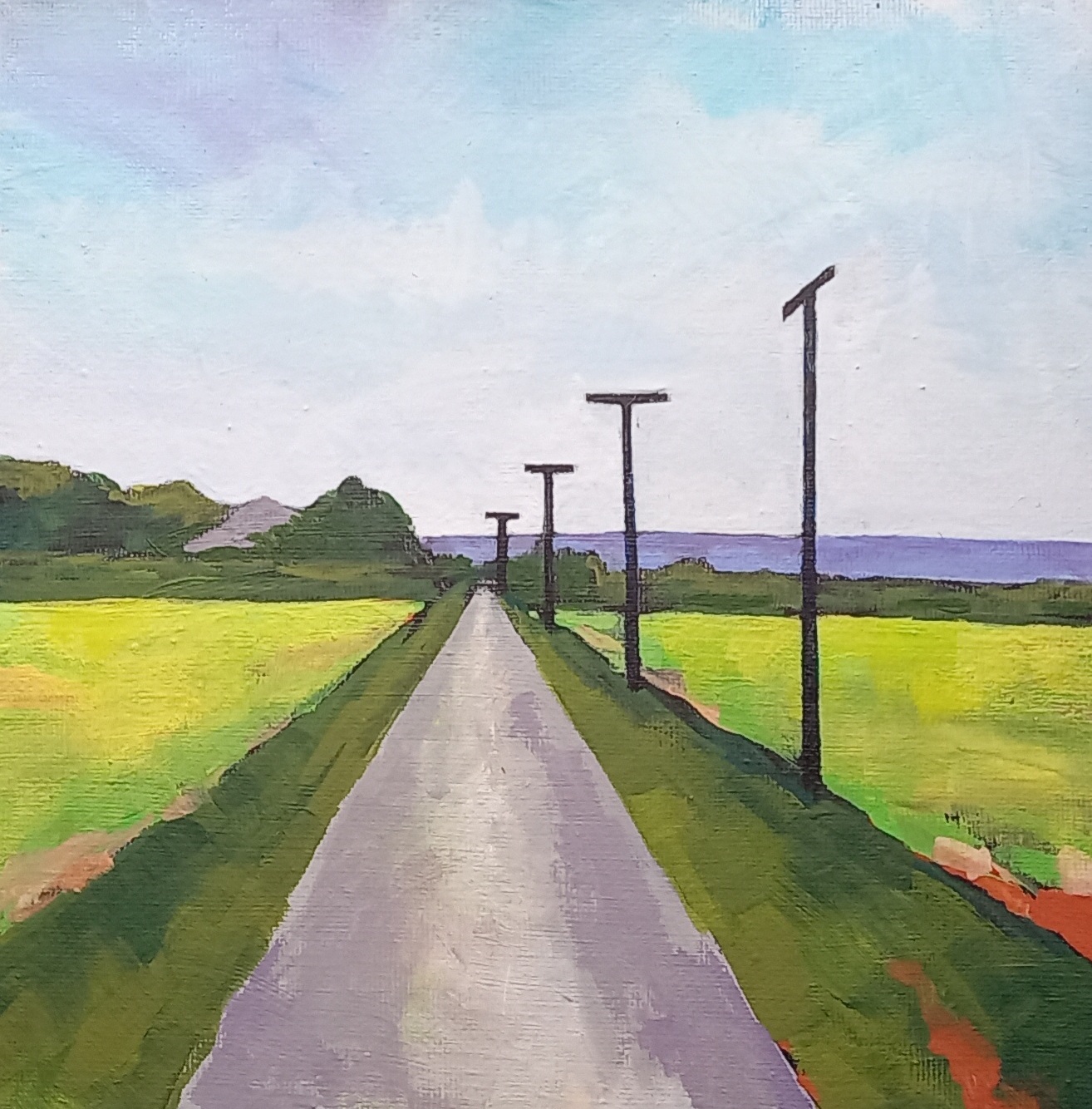
Norfolk Landscape by Kerry Long
Three WNAA member artists are exhibiting at Purfleet Brasserie, just off King Street, 50 yards from the Customs House in King’s Lynn from 26th March to 7th May. Kerry Long and Michelle Louise Carter both from Heacham, are exhibiting alongside Snettisham based artist Helena Anderson. It’s an exciting opportunity that is curated by the West Norfolk Artists Association. Continue reading
5 Upstairs
 4th April – 28th April, from Tuesday to Saturday each week .
The Gallery Venetia’s Yarn Shot, 16 Norwich Street, Fakenham, NR21 9AE.
The yarn shop is closed on Mondays .
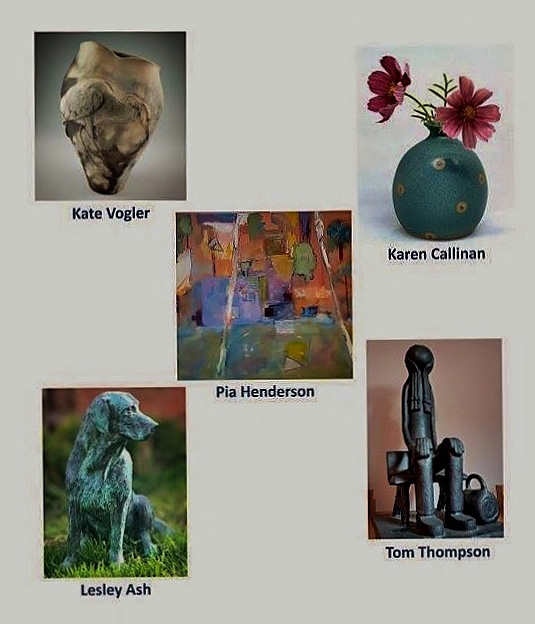
5 artists getting together to put on an exhibition in the upstairs gallery of the yarn shop in Fakenham. The exhibition space has been running for about a year. WNAA member Tom Thompson whose work is well known to members.
Pia Henderson Is a painter, Kate Vogler is a potter who makes wonderful pit fired pots with abstract surface variation, Karen Callinan is local potter who creates beautiful glazed pots, Lesley Ash, is a sculptor, she creates bronze resin animal sculptures.
Explorations II. Julian Bull
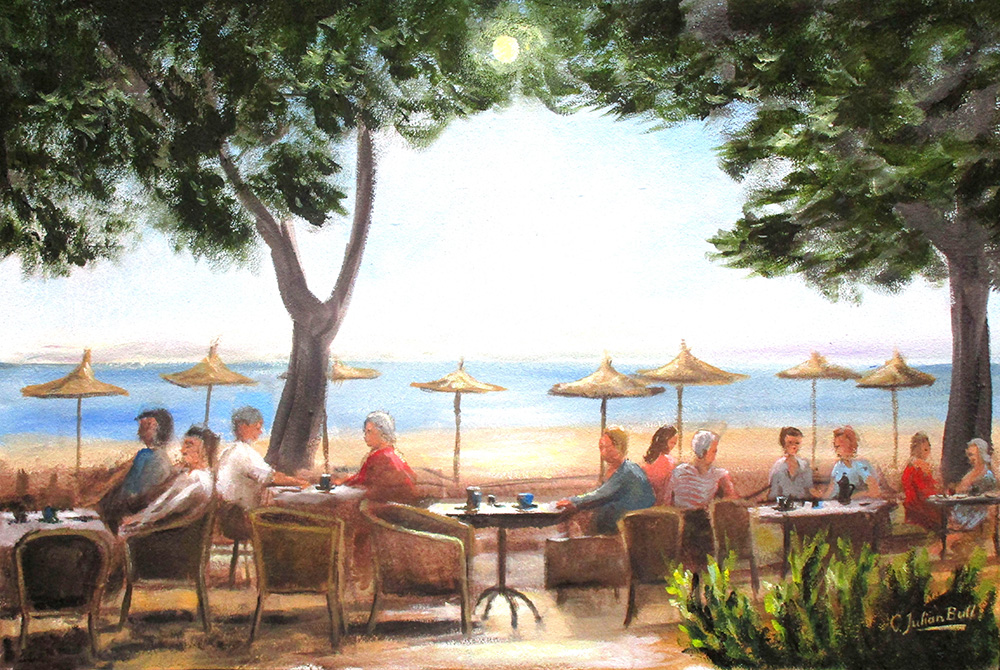
Coffee on the Pinewalk, Mallorca
Back for a second year at the Dragonfly Gallery in Watton.
April 3rd to April 28th
Weekdays 10 – 4 and
Saturdays 10 – 1pm Continue reading
David Lendrum and Helga Joergens
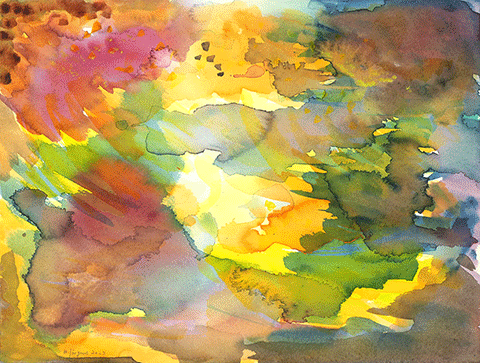
Helga Joergens: Sunburst, watercolour on paper
The exhibition David Lendrum and Helga Joergens takes place
at the Purfleet Brasserie Bar and Restaurant from
Thursday, 9th February –
Sunday, 26 March 2023 Continue reading
WNAA Autumn Exhibition 2022 in Pictures
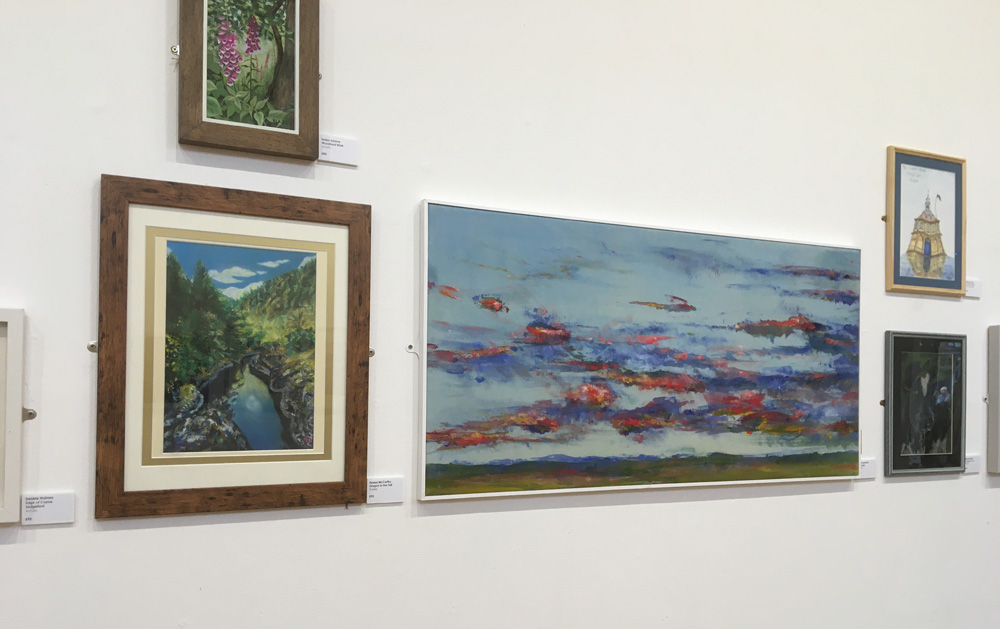 Our exhibition at the Fermoy Gallery was beautifully curated this year by Lydia Haines and Helen Breach, so many thanks to them. Out of all the great art on display their Curators’ Choice was for mixed media work by Anto Morra. Read more …
Winslow Homer Force of Nature.

The Gale 1883-93
National Gallery London until 8th January 2023.
I’ve been a Winslow Homer fan for a long time but was long resigned to no one here having ever heard of him, despite his standing as a major artist in the USA.
So, I lost no time booking my ticket when I realised the National Gallery were putting on a major exhibition “Force of Nature” featuring works from his long career.
To quote the National Gallery.
“For the first time in the UK, we present an overview of Winslow Homer (1836–1910), the great American Realist painter. Well known to many but not everyone, follow Homer’s journey from magazine illustrator to sought-after artist in oil and watercolour.”
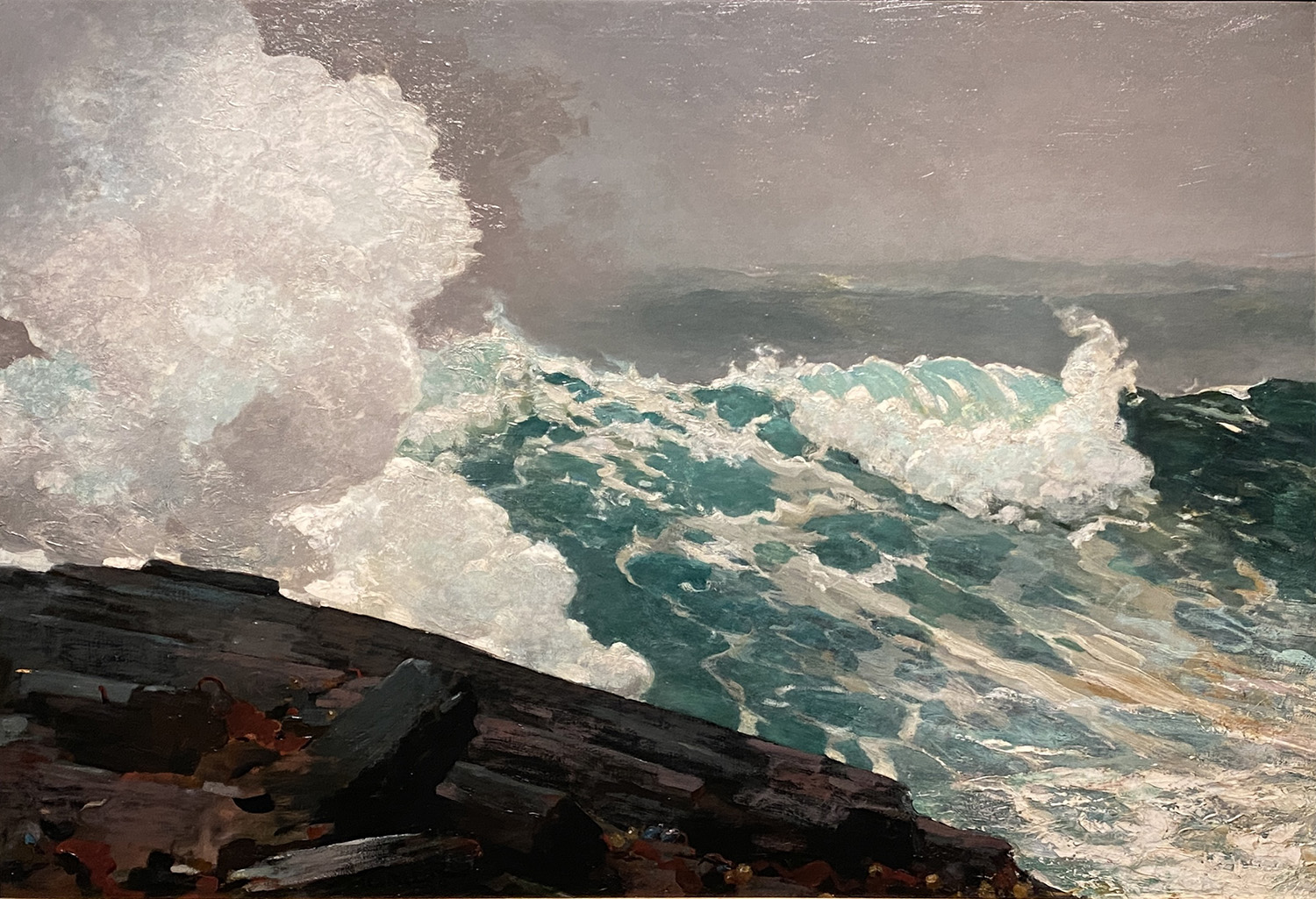
Northeaster 1895
With more than fifty paintings, covering over forty years of Homer’s career, the exhibition is a lot to take in in one visit. Many of the paintings have travelled from the Metropolitan Museum of Art, New York.
Homer first came to public notice as a war artist in the American civil war which had a massive impact on him. From exploring aspects of war, he went on to paint the lives of emancipated former slaves reflecting the difficulties they faced. He had a deep interest in people living in times of struggle. However, he also painted young society women and children.
He always let his work tell the story, not elucidating if asked for an explanation.
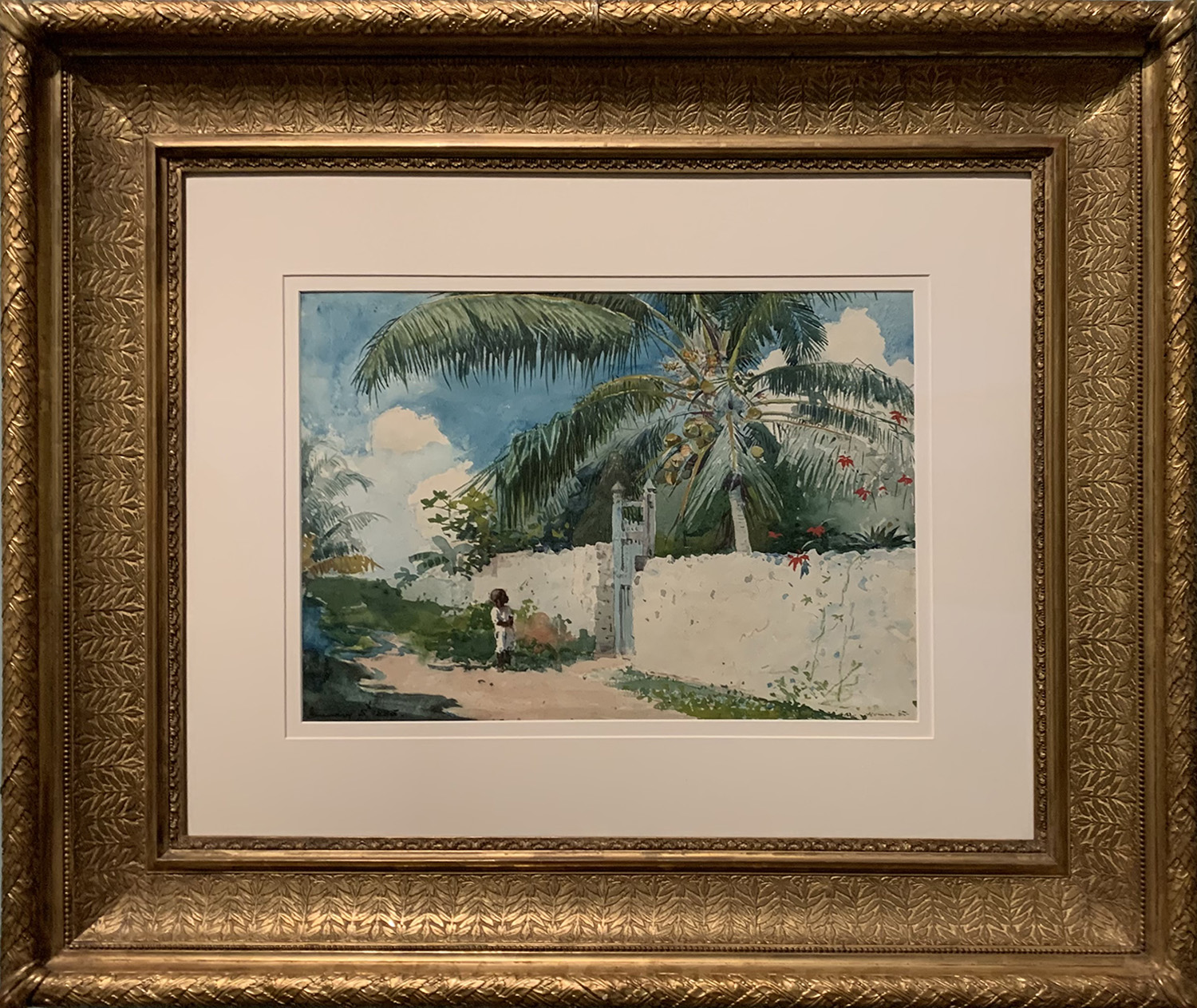
Apart from some early months in Paris, he lived and worked between the USA mainland and the Caribbean, Barbados and Bermuda.
The interlude that has always interested me is the 18 months he spent in Cullercoats, a coastal fishing village in the north of England. It was an artist’s colony, but he stayed through the winter when most visitors returned home. He made many sketches and paintings in his time there illustrating the tough lives of the women. These images also informed his later works.
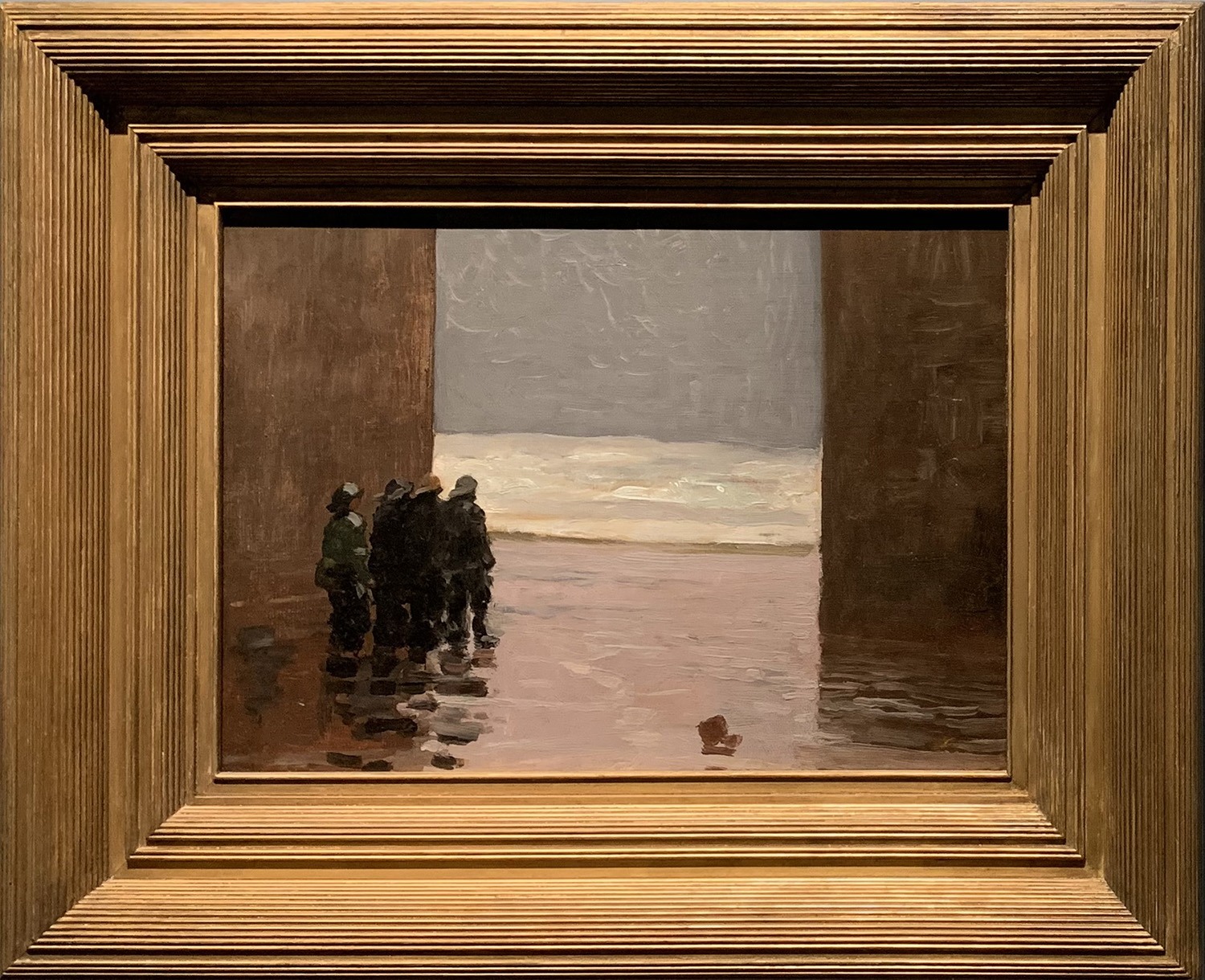
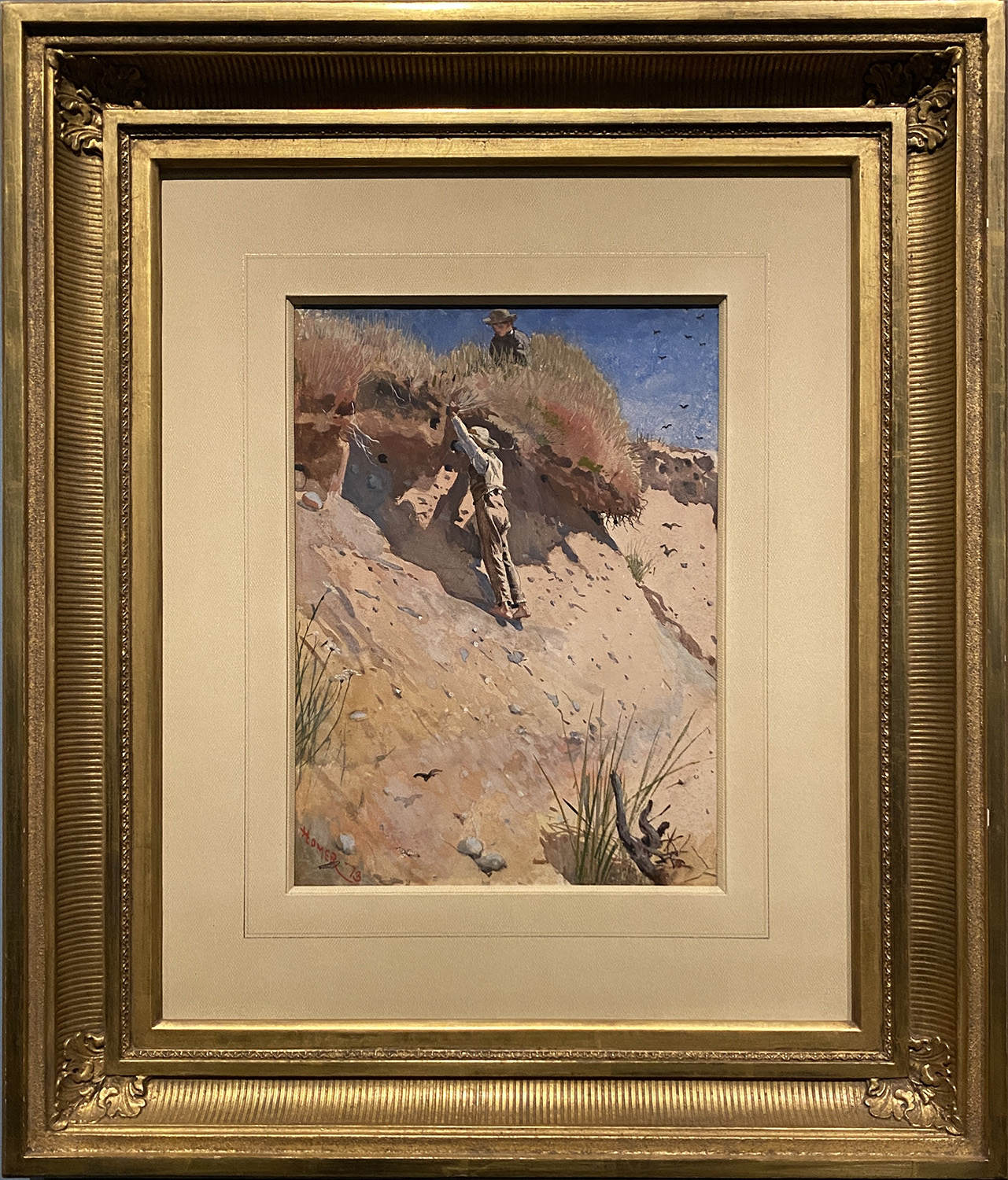
Through his career he also had a love of seascapes painting the sea in a myriad of moods and the wild seas at Cullercoats added another dimension. He witnessed the life savers rowing out to rescue the crew of the Iron Crown inspiring a major work of his career. Towards the end of his life the sea, a central theme throughout his life became the dominant subject of his art.
The exhibition has a wonderful selection of watercolours and oils which trace the development of his painting style, always with the consistency and development of his colour palette and his attention to light.
It’s difficult to sum up such a huge body of work completed over 40 years, but I loved having the rare opportunity to see all these works together and would recommend a visit.
Michele Summers
Fabulous Creative Experience
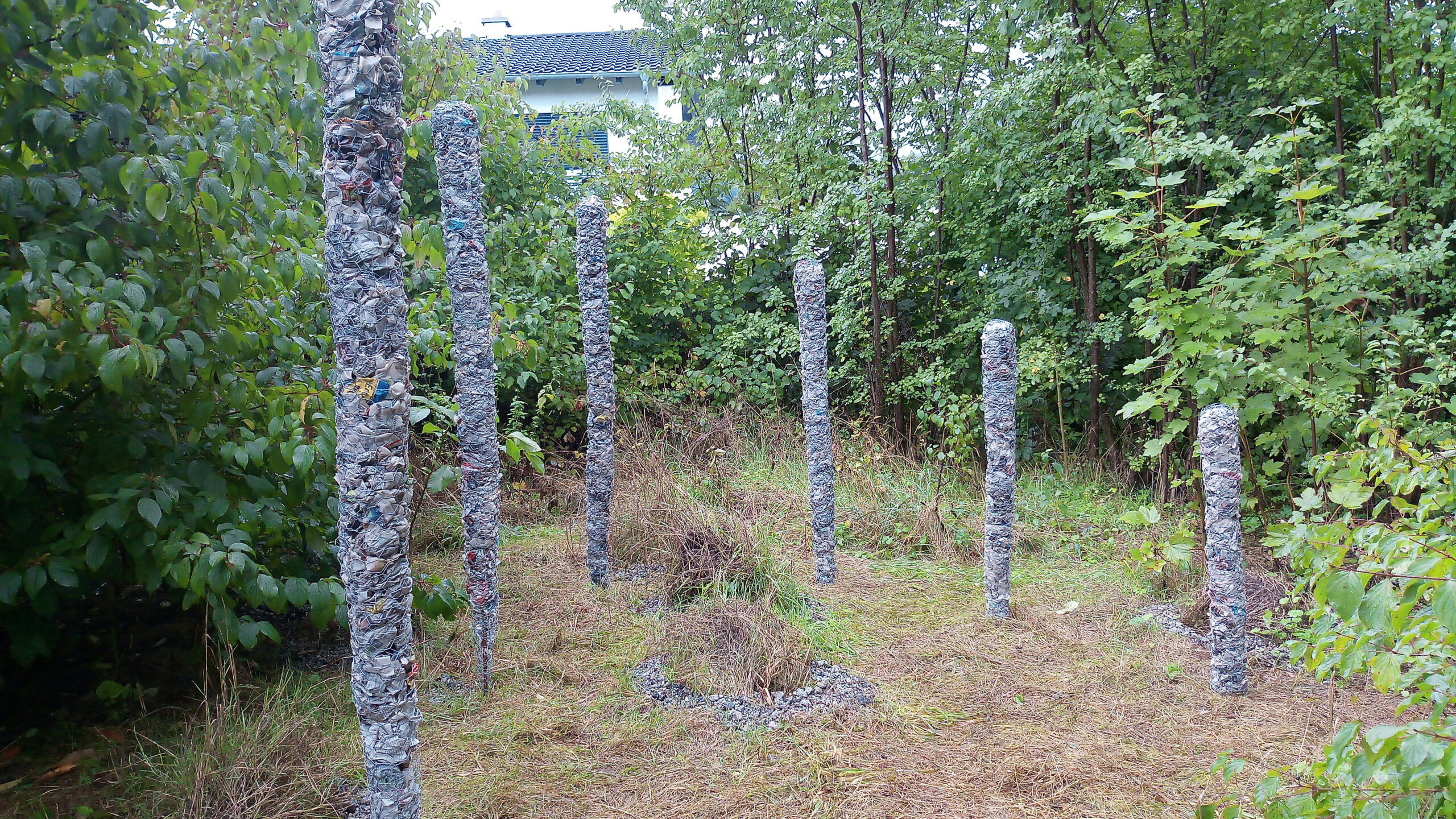
A section of the installation showing the height increasing.
In September I was invited to take part in an Art Symposium in Neukirchen, Bavarian Forest, Germany.
The theme was Cosmos.
When thinking of Cosmos – the first impulse is to think of the universe. So when I took a look at my huge book by Alexander von Humboldt called ‘Cosmos’, I was surprised to find it more to do with natural science and geology than planets and stars – and that Cosmos can also mean order and harmony. Humboldt’s work had to do with the earth as an interconnected whole.
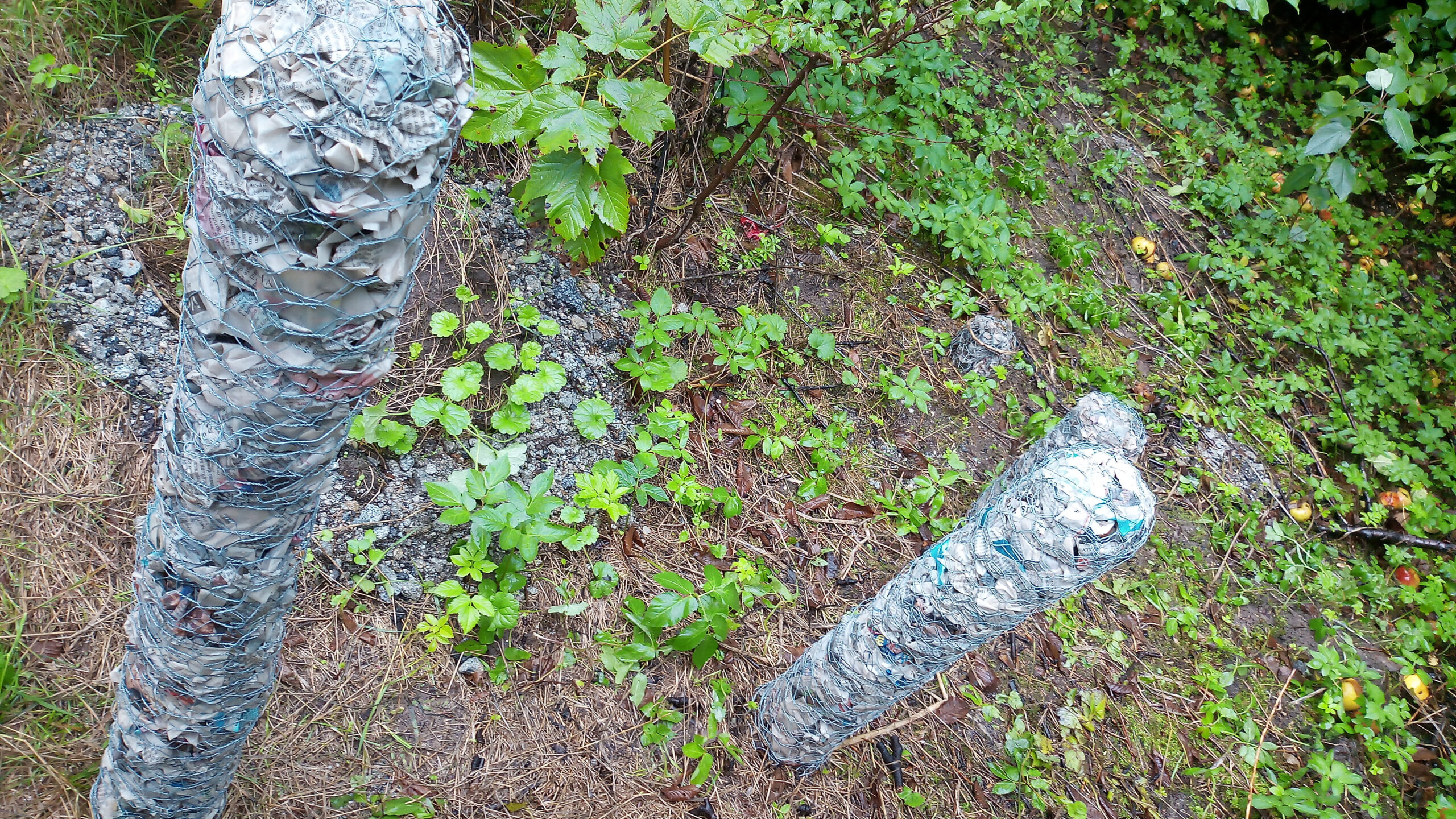
The objects are growing from the ground around an ant hill.
My concept for the Symposium took aspects of all. Based on my installation of 2019 in Norwich where I built pillar-like objects using armatures (wire structures) covered in plaster – I imagined these objects as a sequence growing out of the ground. The first of eleven was about 15 cms, the last over 2 metres. Symbolically, I was taking Humboldt’s earth and having it grow into the heavens.
The other aspect of my concept had to do with using natural elements and experimenting to see what would happen if I mixed them with cement instead of plaster.
At the Symposium, I met seven artists each with their own concept of Cosmos. We were able to choose to work in a former butcher’s/pub with rooms up above, post office or café (a sad sign of the times that villages are losing such services). For us, an amazing opportunity to develop our ideas and create.
The discovery of a neglected garden on site was the perfect spot for me to create. The Symposium and experimental nature of it, gave me the freedom to fail. It didn’t matter if the projects were complete or if your exact proposal was realised. It was the exchange and development of ideas that was important. For me, some of the ‘failures’ were the most exciting parts of my experience. One of them was mixing elderberries into the cement. All previous experiments worked wonderfully – so it was quite surprising when the cement didn’t set and crumbled when pressure was put on it. Also, my hope of colouring the cement purple turned to grey!
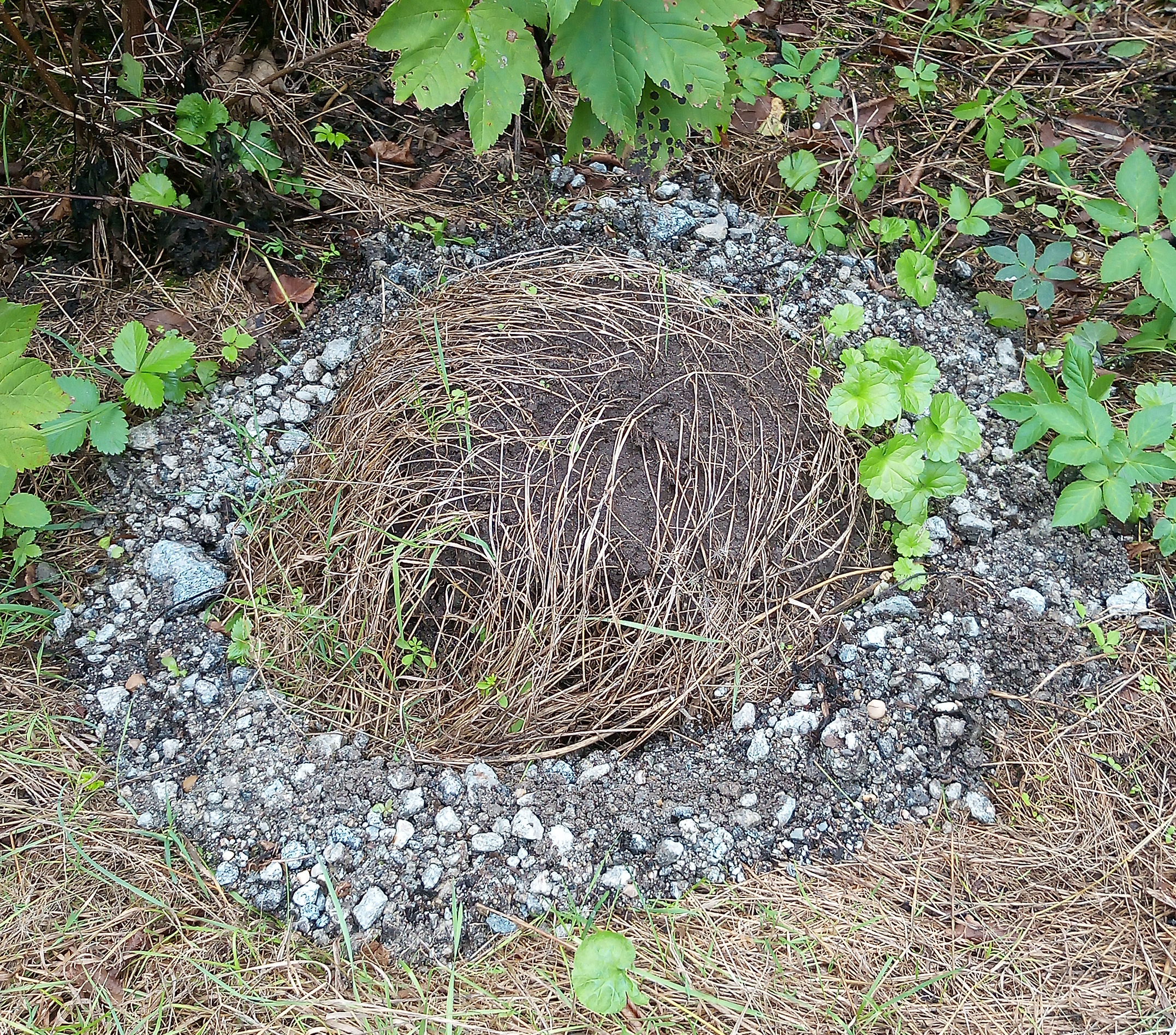 In the garden while clearing the long grass, I discovered several ant hills. Not wanting to disturb them, I used rubble found on site to ring each one, forming an ant hill constellation. It became part of my installation. My object placement therefore naturally included these mounds so that everything in the garden became it’s own system – Cosmos. I started creating the elements of my sculpture using chicken wire stuffed with crumpled newspaper for my sequence of evolving objects. I was going to use cement. Other artists suggested that it looked good as it was. So, this part of my work was complete.
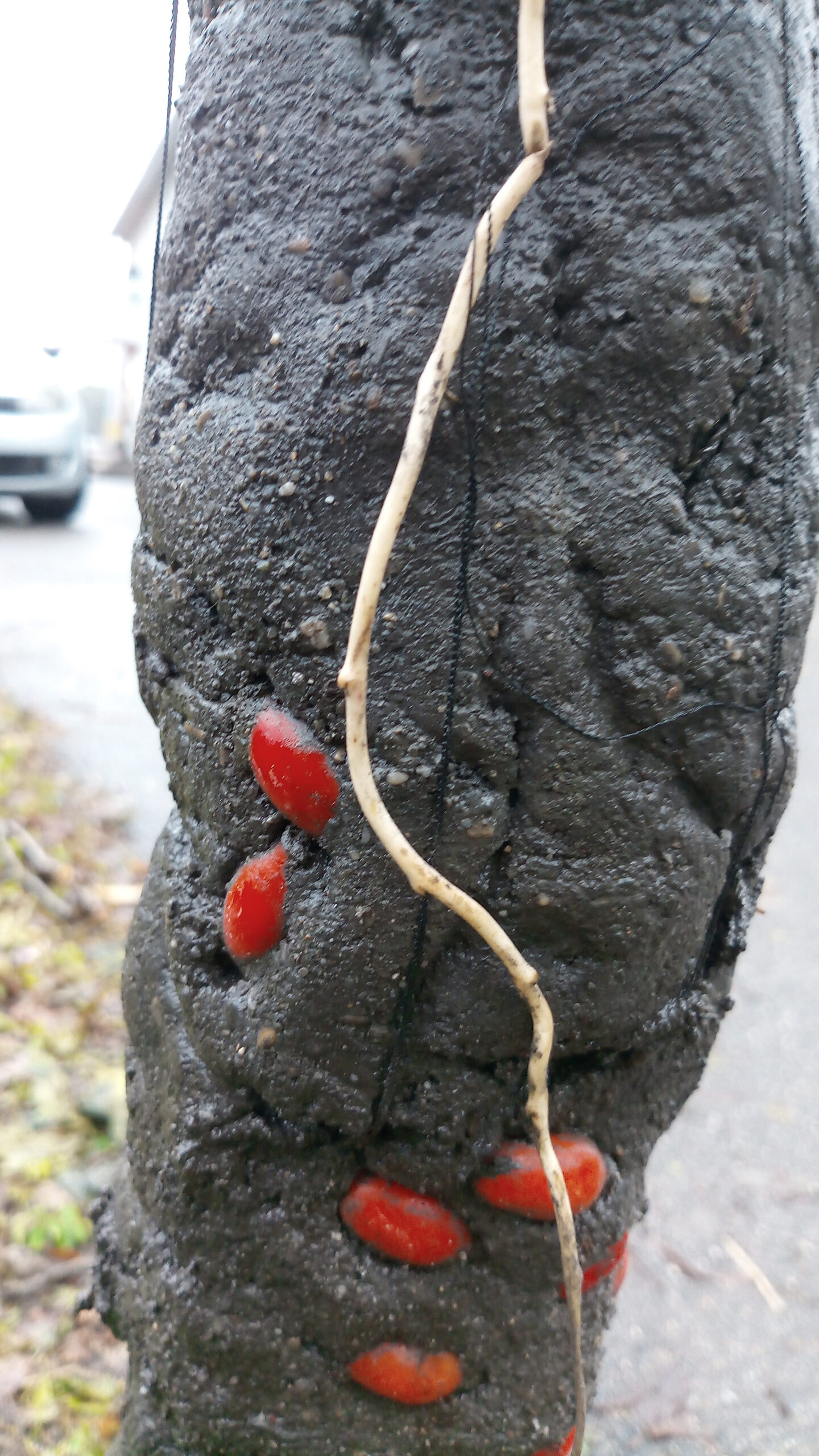
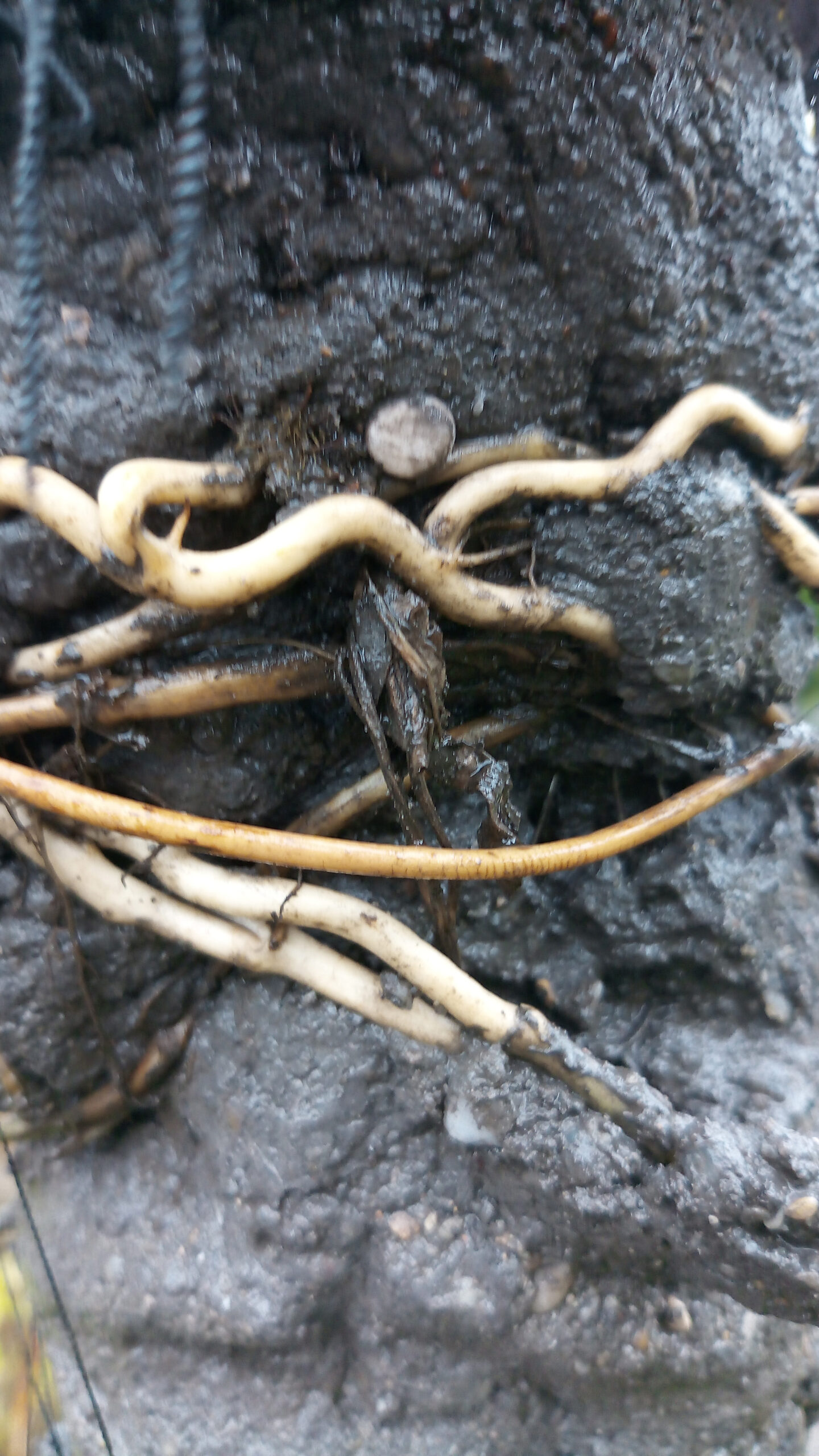
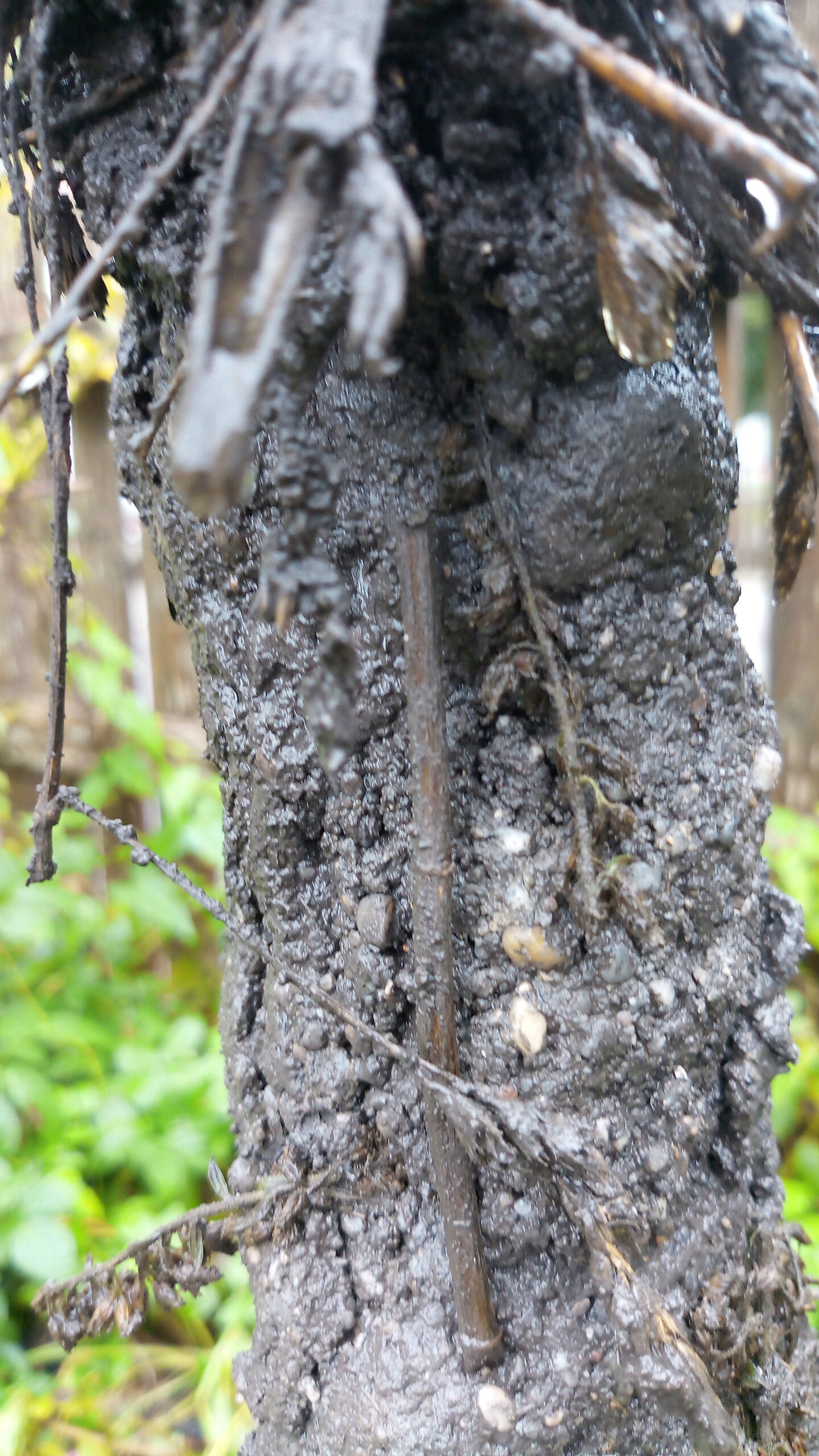
In the time I had left, I devoted myself to two further objects using my original idea of oxide coloured cement mixed with natural materials. Rain set in. The rods for the pillar-like sculptures couldn’t hold the weight of the wet cement. With the help of a couple of the other artists, we constructed a support system. It didn’t end up looking as I had planned – the cement set with the addition of rose hips, bindweed roots, stinging nettle stalks, seed heads, berries (not elderberry) that I added to it. In the context of the Symposium I wasn’t able to see what would happen over time but it was a wonderful basis for new experiments.
-
- Rosehips & bindweed root
-
- Bindweed roots
-
- Stinging nettle stalks & grass
-
- Seed pods
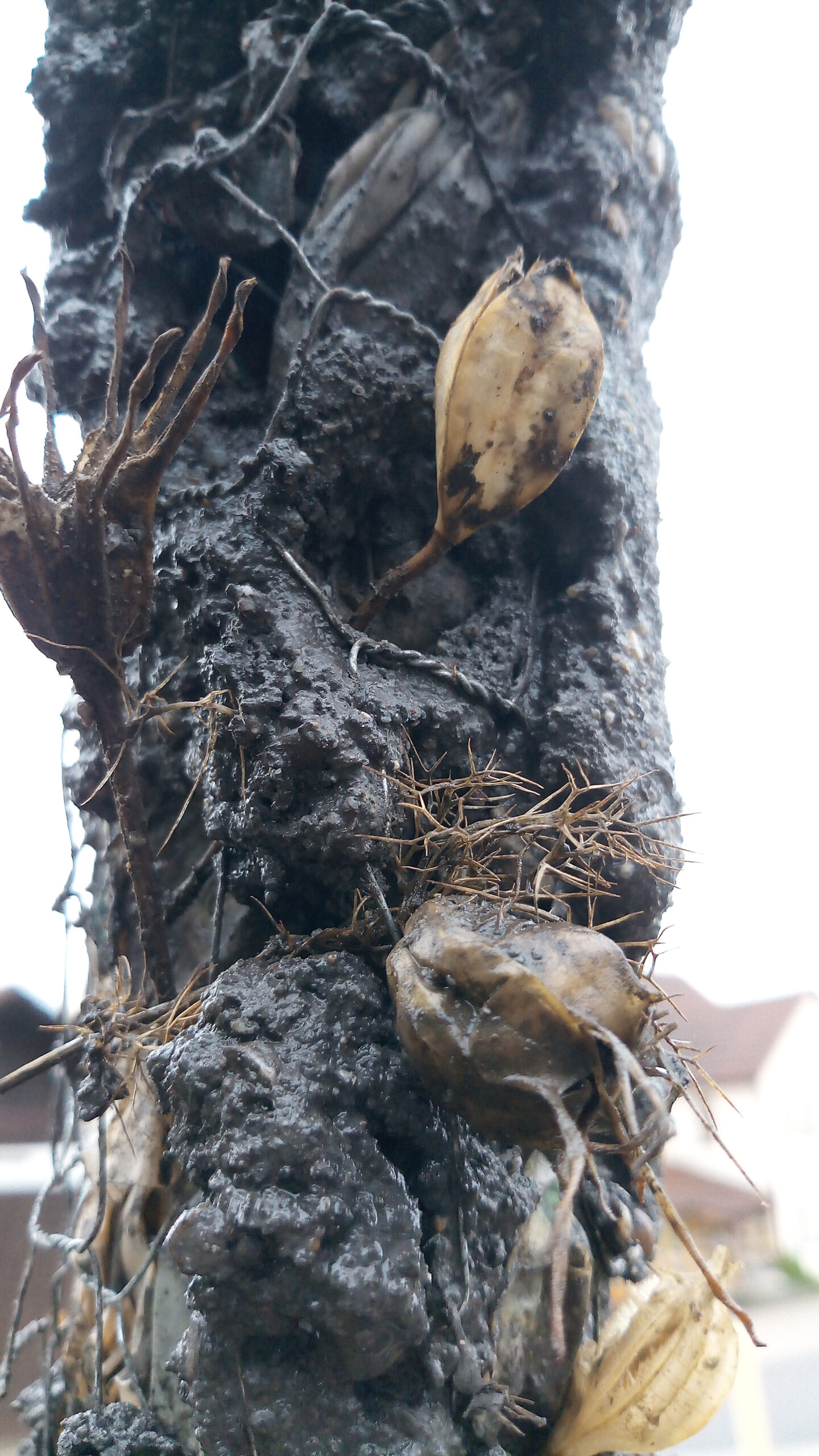
What this Symposium showed me was that embracing mistakes made it much more fun. They weren’t ‘mistakes’ they were just an observation of the state of things – the magical part of learning. So often we restrict what we do because we are so intent on getting it right the first time. We can get it right in the end but why not have fun on the way?
My Studio is open on Saturdays and Sundays from 10-1. Visitors always welcome. (Do call first if you are coming from further away.) We could talk about projects to get you started be it lino-cut, clay, plaster and a whole lot more.
Esther Boehm
Studio @ 55 • 55 High Street • Heacham, PE31 7DW
https://www.studioat55.com • eb@estherboehm.com
T 01485 570 506 • M 07538 986 235
Links & Layers’ Connections Exhibition
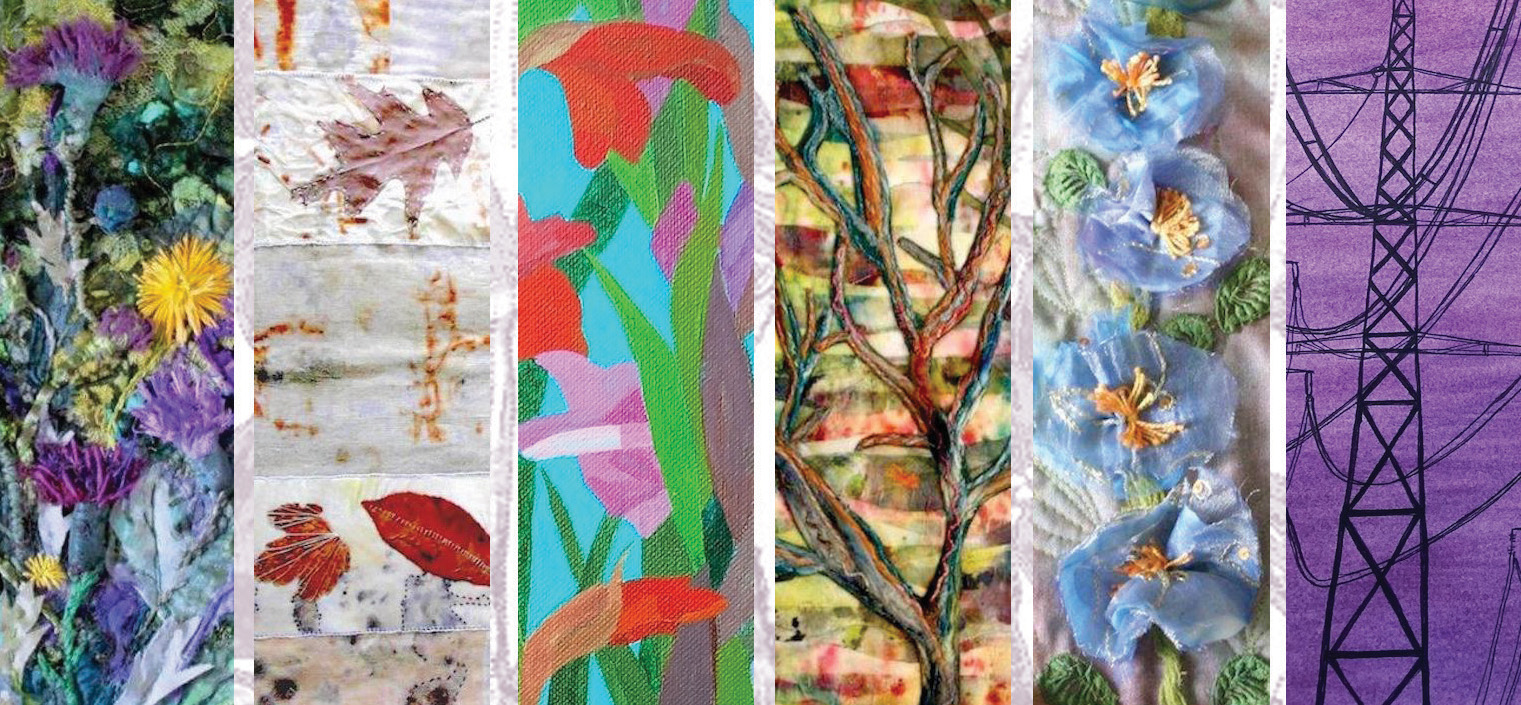 West Acre Gallery
Abbey Farm
River Road
West Acre
PE32 1UA
Friday 21st October to Tuesday 25th October
10 am to 4 pm. Continue reading
ArTogether East Exhibition
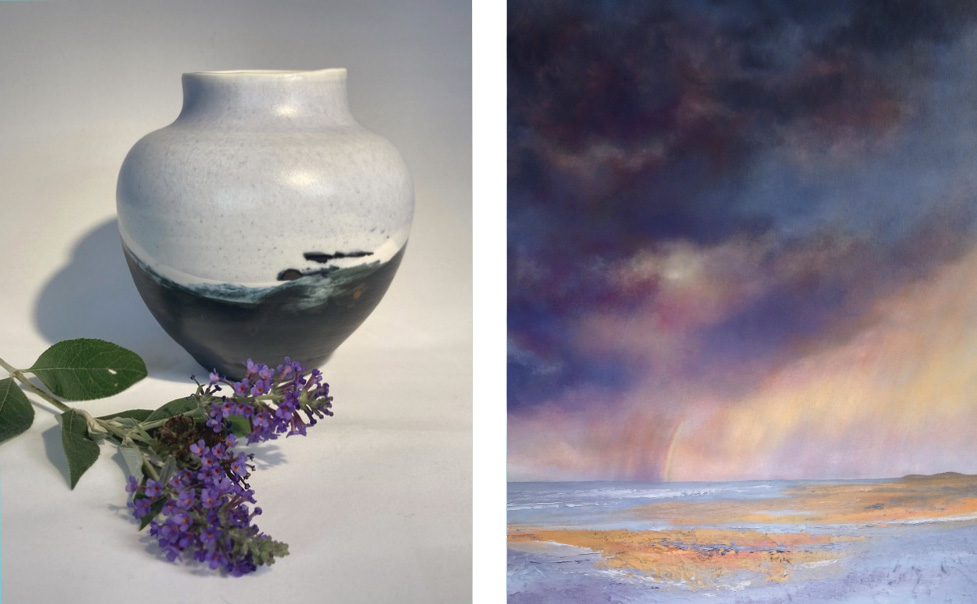 Norfolk Creative Arts
Church Hill School
71 Gayton Road
Grimston
PE32 1BG
Saturday 22nd – 28th October
10-4 Continue reading