Author Archives: Esther Boehm

IN CONVERSATION WITH MICHELE SUMMERS

Interview with Esther Boehm

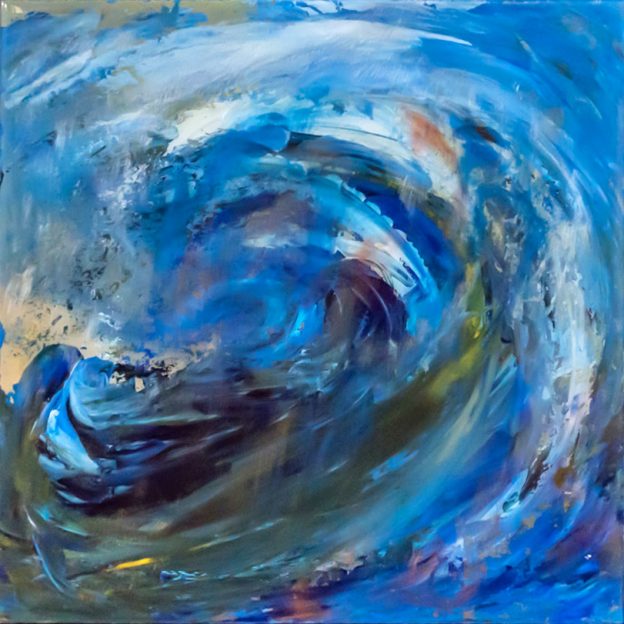
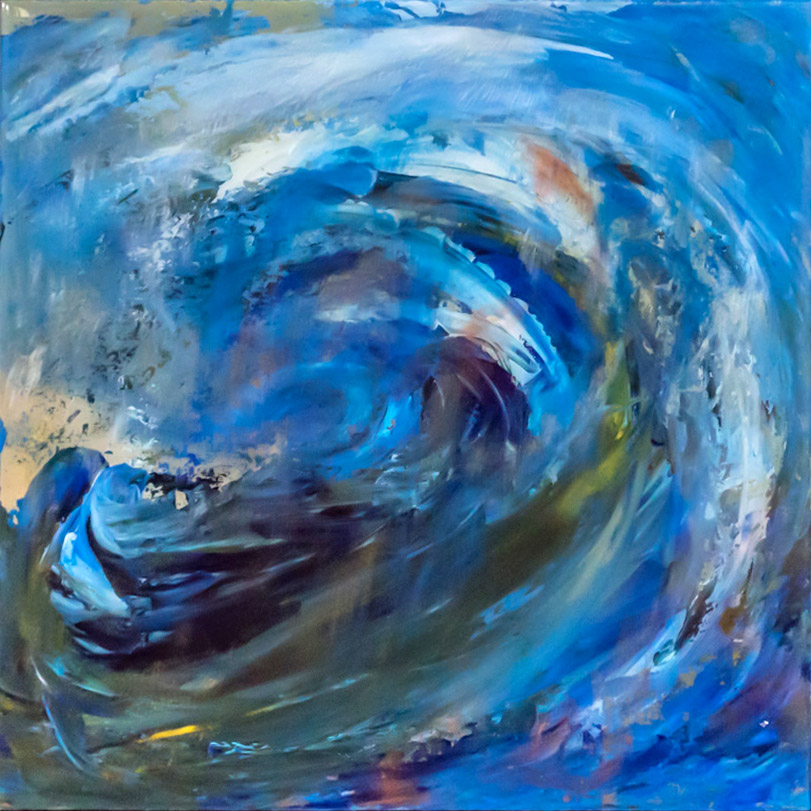
THIS YEAR WE FELT VERY PRIVILEGED TO HAVE VERONICA SEKULES OF GROUNDWORK GALLERY SELECT THE BEST IN SHOW (SYD DAVISON CUP) AT THE SUMMER EXHIBITION. SHE CHOSE YOUR WORK. HOW DID THAT MAKE YOU FEEL?
I was very surprised and it felt great to have my work chosen. It had been quite a struggle to get the pieces finished as I had a few false starts with the resin work. The precision needed with the technical side was at odds with the energy I wanted to portray in the work. The prize felt like a reward for my persistence! Continue reading

Trip to Paradise Island

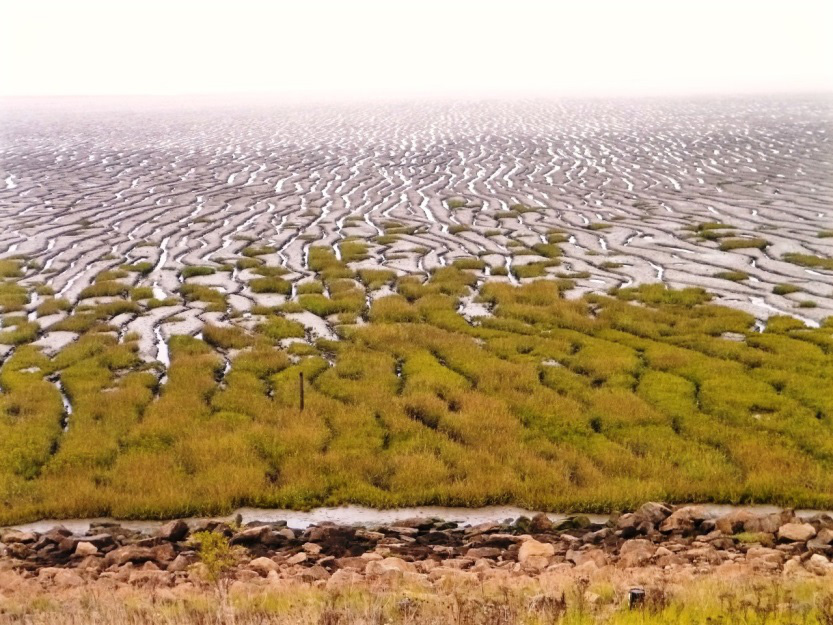
When Annie and I set off to Paradise Island the sky was threatening. We had planned our trip to coincide with low tide. The Bounty Bars were packed, we were wearing our waterproof trousers and nothing was going to stop us.

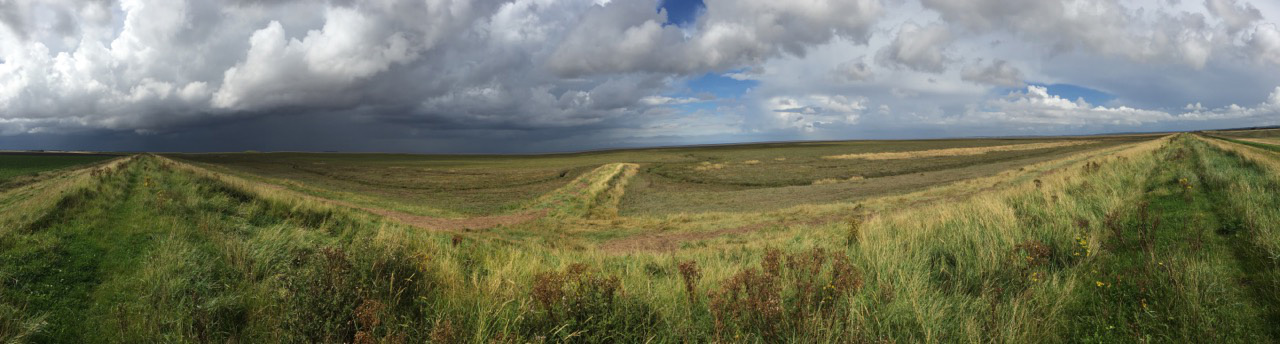
Leaving the car at Ongar Hill out on the Terrington marshes we turned left along the sea wall. Depending on your point of view, there was either nothing to see or there was an amazing vista of salt marshes bisected by saltwater muddy creeks where the mouth of the river oozes into the Wash. The sky was huge and constantly changing, grey chasing blue. I had my trusty Lumix camera but had recently been on an iPhone photography afternoon and was interested to try out some new photography apps.

As we followed the path, part of the Peter Scott trail, we could see our island from a long way off as a small mound on the otherwise flat horizon. There are two islands. The first is some half a mile out from the sea wall and connected by a soil causeway. The second is visible nearly two miles out into the Wash near the bombing range. They were made in the mid-1970s when there were plans to build a sand wall across the Wash and turn it into a huge freshwater lake. These two trial banks were apparently made to test the theory. A friend had named the closer one Paradise Island as on Google satellite view it has the appearance of a pacific atoll!

It was about 4 miles walking to the island. The causeway turned out not to be the raised thoroughfare we had expected but a wet muddy path across the marsh, so hidden in the flat land that somehow we walked straight past the start of it and only spotted it sloping down the bank when we turned back. A line of white posts had distracted us — we imagined they marked the way but they just stretched in an enigmatic line far into the distance. There were wooden plank bridges across muddy creeks and we sloshed our way to the start of the rise, pausing to pick and eat some samphire growing along the way.

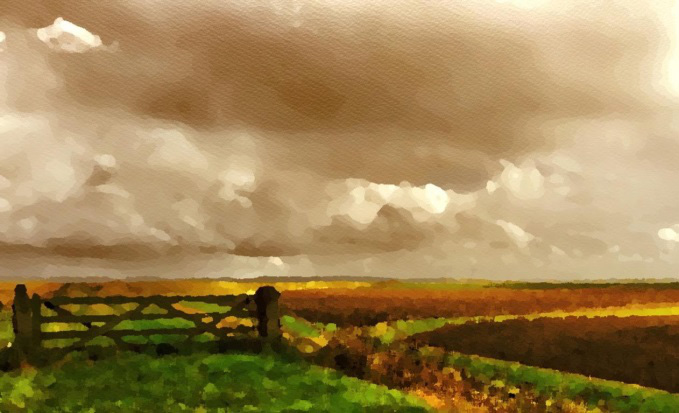
I enjoyed experimenting with the iPhone apps manipulating the pictures into instant “paintings”.  The results give a different way of looking and inspiration for art works. Apps I used included VSCO, which has a focus and an exposure button, which you can split on the screen. If you push the exposure button to different areas it changes the appearance dramatically. VSCO also has some editing tools. Enlight app offers “artistic” editing tools that are fun to use. The Waterlogue app turns any photo into a facsimile of a watercolor.

We puffed our way up to the top of the Island and were rewarded with a view expanding in the distance to include the whole coast from the mouth of the Ouse along to Hunstanton, with visible landmarks such as the church at Snettisham. Behind us the flat fenland fields were a patchwork of browns and green. Immediately in front of us rocks were piled in a protective crescent halfway around the base of the island and the creeks formed intricate patterns through the mud flats.

Finding two handily placed rocks we sat down to rummage for our sandwiches and then the ceremonial Bounty bars. As we munched we contemplated the fact that we could see from our vantage point that the earth is flat and if we had the means to walk through the mud we could walk onwards and fall off the edge. The silence was profound. The few birds we could see also seemed lost in contemplation. The light changed every few minutes and again there was nothing and everything to see.

On the walk back under stormy skies we surprised a buzzard. Despite having the camera in one hand and the iPhone in the other I just took pleasure from the sight as it rose up in front of us from behind the bank and wheeled away. Walking along the top of the bank gave us great views of the contrast between the wild marshland on the seaward side and the acres of rich dark fenland soil ploughed on the landward side.

We made sure we went at low tide but I think it is only on the highest spring tides that the causeway is covered. The whole Peter Scott walk is about 10 miles from West Lynn to the lighthouse at Sutton Bridge. If you like huge landscapes where the only features are man-made sea defences, experimental islands and mud all overlain with huge skies then I can recommend a walk to Paradise Island.

Michele Summers

The Hague, Piet Mondrian and the Mauritshuis

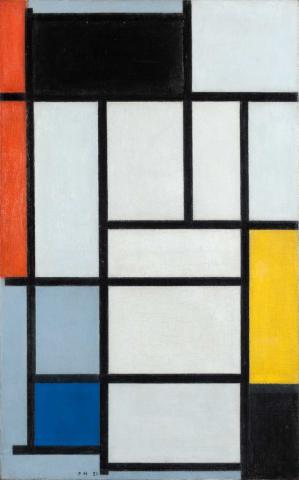
Piet Mondrian
Composition with red, black, yellow, blue and grey. 1921
Gemeentemuseum

The Hague:
• Home of King Willem Alexander and Queen Maxima.
• Residence Huis ten Bosch.
• Seat of the Cabinet of the Netherlands. (tweedekamer)
• International Court of Justice.

In mid-September I visited The Hague; the purpose of my visit “Discovering Mondrian” an exhibition at the Gemeentmuseum in the city. The Gemeentemuseum houses and owns the largest and best collection of Mondrian’s’ in the world.

As a devotee of Mondrian’s oeuvre and a fascination in his unique journey from being a very competent landscape painter to the very modern abstract art for which he is better known today. Continue reading

SAVING GREYFRIARS ART SPACE

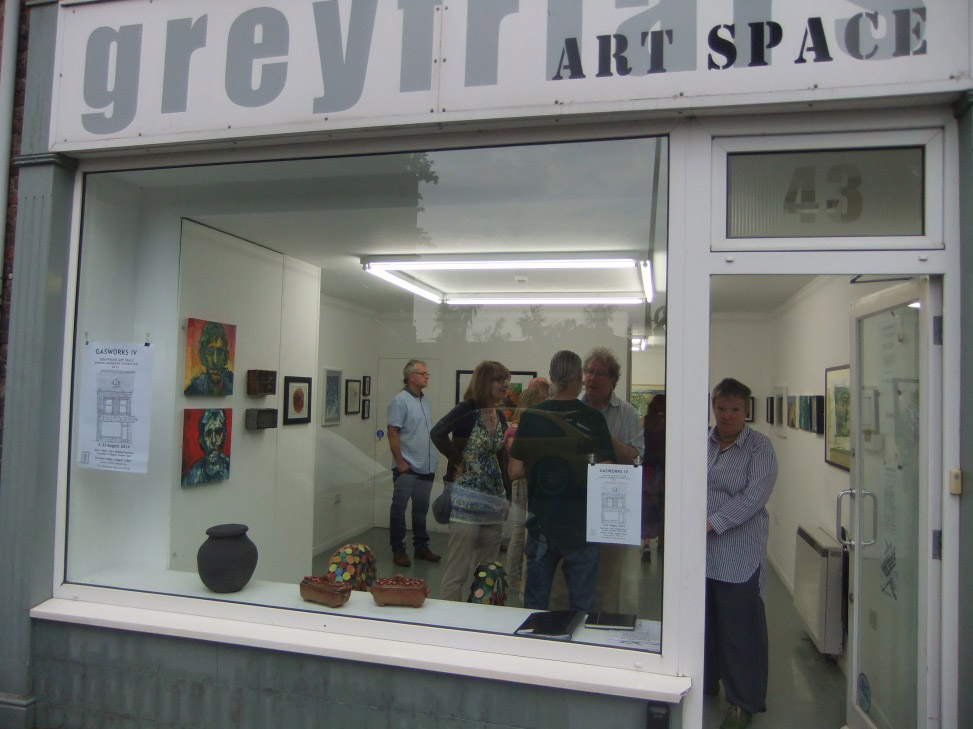
Greyfriars Art Space first began in February 2008, when Jill North, with a group of B.A. Fine Art students, based at the College of West Anglia, decided that there was no affordable space in Kings Lynn for emerging young artists to show their work. Jill was able to purchase the property at 43 St James Street, and together with friends transformed it into the attractive small gallery we know today.

Greyfriars Art Space is an artist-led – a not-for-profit association of members which aims to provide professional exhibition opportunities plus affordable studio workshop spaces. A modest membership fee of £20 per annum ( £10 for students ) helps to support the Gallery’s running costs. The day-to-day management is carried out on a voluntary basis by the Committee, co-ordinated by Kathy Cossins, who earlier this year received one of the Mayor’s Voluntary Service Awards.

With the demise of the Arts Centre galleries, the role of Greyfriars as an affordable artist-run exhibiting space is even more crucial now than it first started. GAS has been a supportive artistic community for many exciting artists working in a whole range of media which includes 3D, painting, printmaking, photography and textiles.

It is now almost ten years since Greyfriars began, and throughout this time Jill has very generously allowed the gallery to be used rent-free. However, it has now become necessary for her to sell the property within the next year. Greyfriars are urgently seeking sources of funding to enable the Committee to purchase the property. Members who can, have been asked to pledge £300 towards this, so that GAS can continue to develop its role in the artistic life of Kings Lynn and West Norfolk. Anyone able to help in this way, or with any fundraising ideas please contact Greyfriars Art Space at 43 St James St, King’s Lynn PE30 5BZ, via the website at greyfriarsartspace.com, email greyfriarsart@gmail.com or phone 0751 714 7444.

Anne Roberts

Only One Of Its Kind

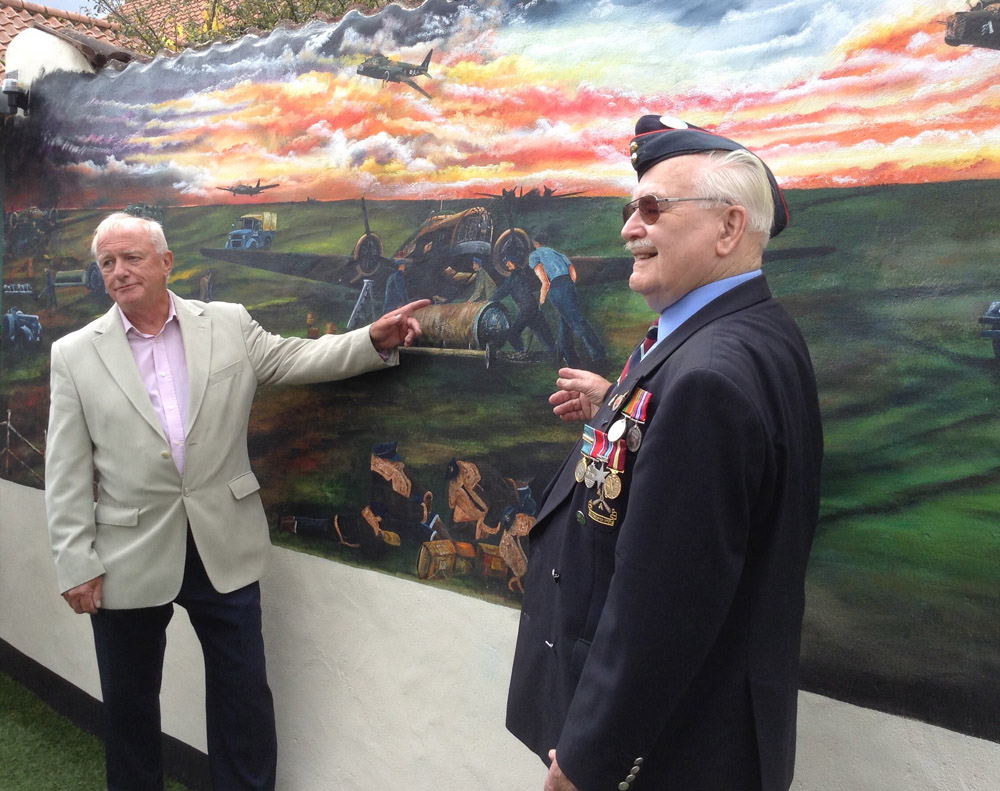
Colin with Ivan Potter radio operator and air gunner on Wellingtons.

60ft Wellington Bomber Aircraft Mural

Saturday 30th September 2017 at 1500hrs. The day The Wellington Wall Mural was unveiled.

On Friday morning 29th September, Forces TV arrived to film and interview the owners of The Wellington pub at Feltwell, Mr Mrs Samuels and also the artist Colin Mason from the Arts Lounge Gallery in Swaffham. The interview and film of the mural went out on Forces TV News on Saturday 30th September and Monday 1st October.

Continue reading

You missed it!

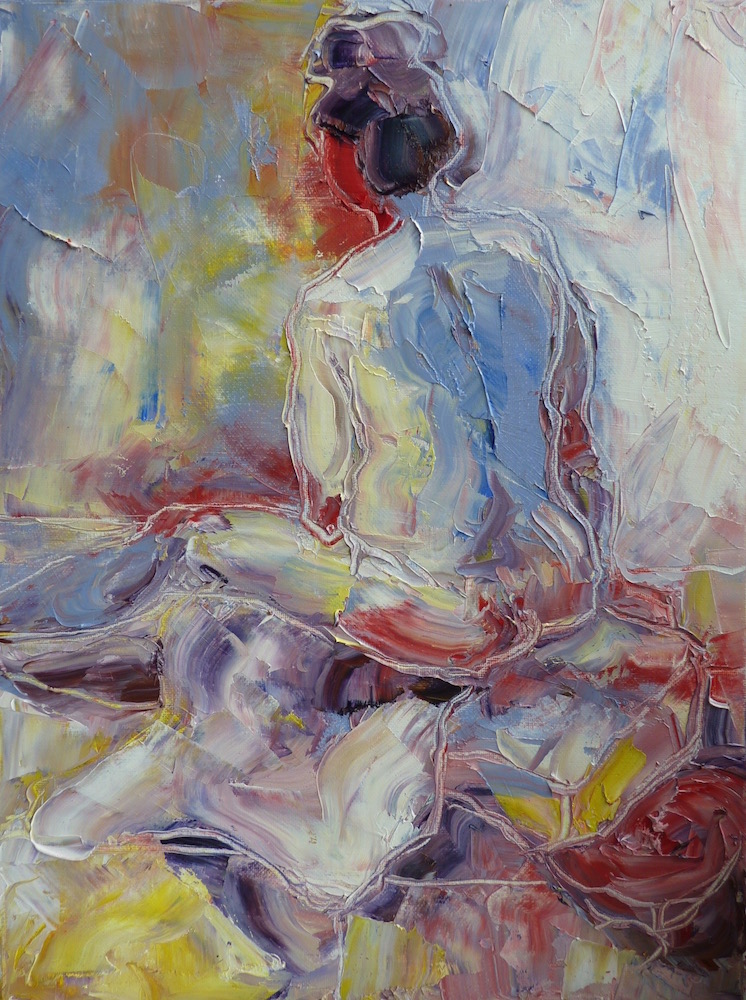
Back View
by Helen Breach

On her first attempt to be selected for the Annual exhibition of  the Institute of East Anglia Artists, Helen Breach was successful with one painting.  

Helen’s painting ‘Back View’ marked a return to oil paints, a media she hasn’t used for many years.  Unfortunately, the exhibition, held at Picturecraft in Holt, has now finished (it was on from 20th – 31st October) – you’ve just missed it!

Continue reading

New Government Consultation on Sales of Ivory in the UK

The Government has just launched a new consultation on sales of ivory in the UK, which will run until 29 December.

Many highly respected galleries feel totally in favour of a ban on the movement and trading of ivory dating from the last 30 years, but believe that anything made partly or wholly from ivory over 30 years ago should be granted immunity provided it has the requisite CITES permit.

Anyone with an interest in this area should respond to the government request for feedback on the trade of ivory.

The consultation document can be found at https://consult.defra.gov.uk/international/banning-uk-sales-of-ivory

Making a Painting: The Process Explored

What shall I paint ? is a question I fairly frequently ask myself. I know that I want to avoid repeating myself too slavishly because my work would soon feel like a pastiche of itself or show me that I am stuck. Which of course I often am. I seem to be searching as I paint as well as responding. Conscious intention mingles with the experience revealing itself. For some time now I have been taking photographs of my paintings and drawings as they evolve. For me the actual journey is as important as the final stage. Continue reading

108 Steps …

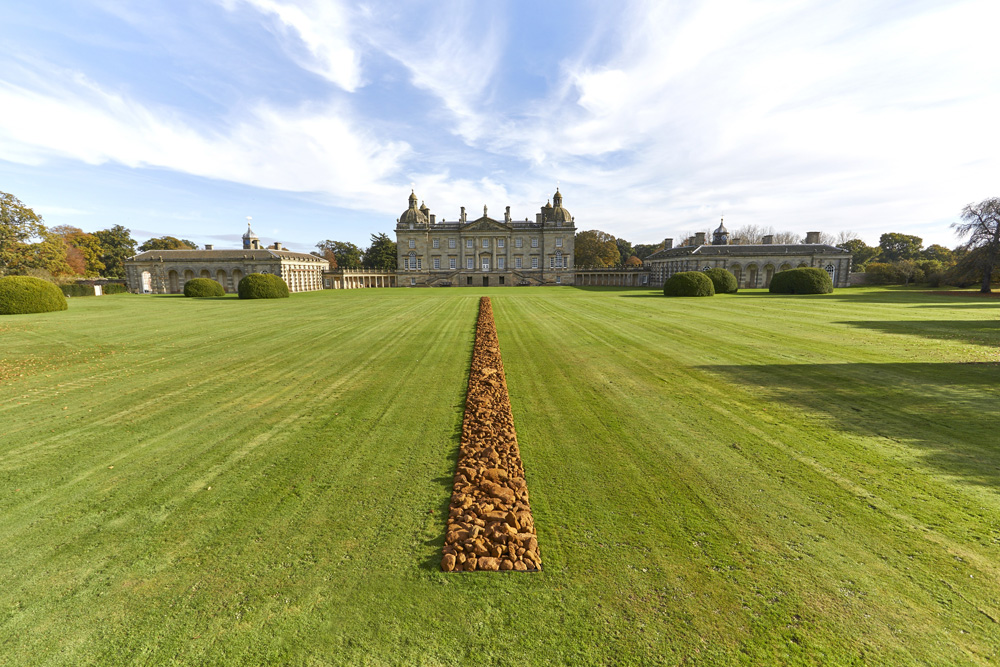
A Line in Norfolk, 2016
Photography: Peter Huggins

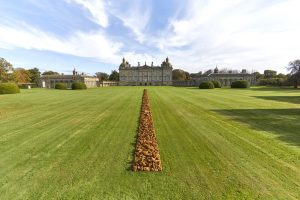
108 steps is what it took me to walk the length of A Line in Norfolk by Richard Long. Walking the line is reminiscent of Long’s ground breaking work of 1967, A Line Made by Walking. Now, 50 years later, I was walking a line parallel to a work made specifically for this exhibition. A measured line made of local Norfolk Carrstone connecting the house entrance to Full Moon Circle, a piece created in 2003 for the Houghton Sculpture Garden.

Late afternoon on a sunny day, the contrast between the shiny flat surfaces and the darker linear edges of the slate carefully placed within the circle were heightened. My slow movement around Full Moon Circle caused the sunlight to flow over the surface, taking up the edges, creating shadow, the surface shifting and shimmering, truly like a full moon. Richard Long says of the piece, “In Full Moon Circle slates were placed flat to reflect the weather and the season. When a high sun moves around the sky on a summer day the circle looks white and brilliant, yet it becomes dark and shiny in the rain, and in actual moonlight it appears very different again.”

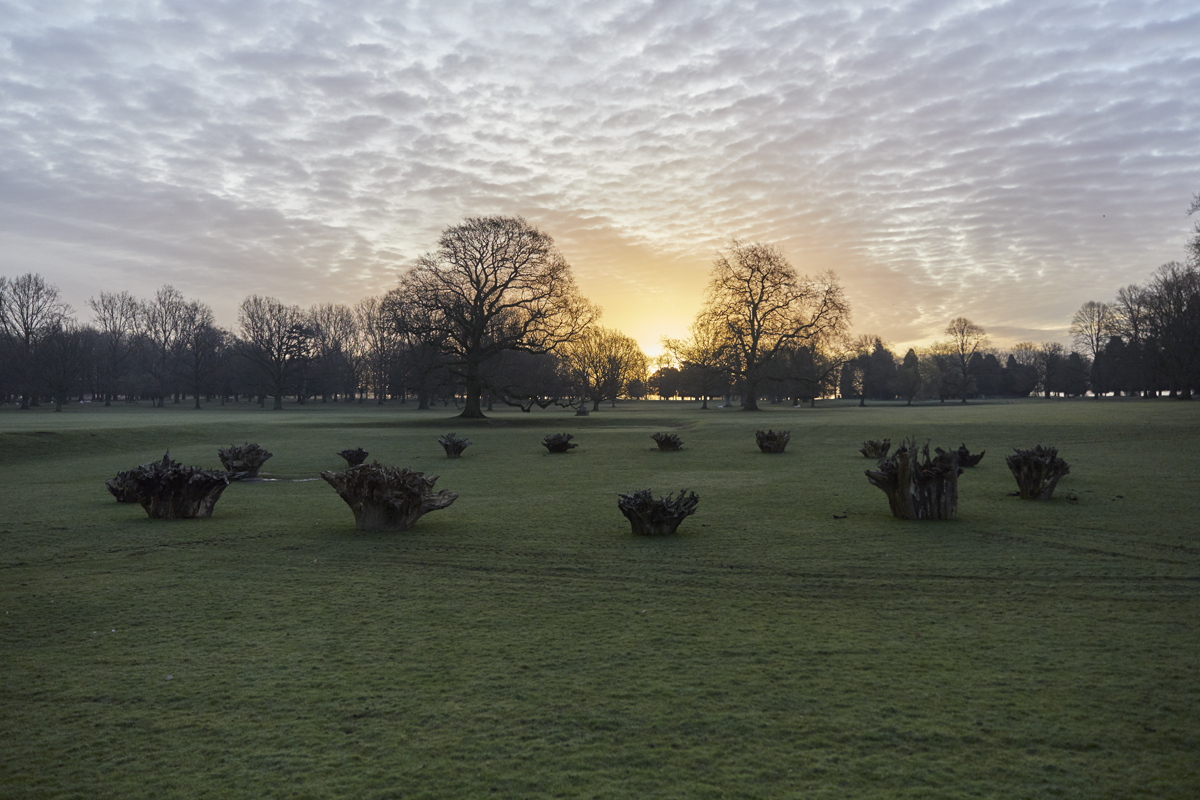
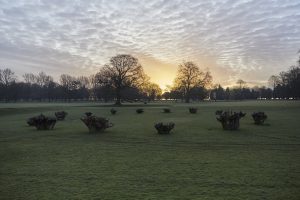
Walking through the extensive grounds, it seems the pieces are deliberately connected through the use of the archetypical line, circle, cross and spiral used by Long throughout his career. A spiral is found within the circular form of Wilderness Dreaming and again in White Deer Circle where Long used massive tree stumps dug up around the estate. ‘Sea Henge’ immediately comes to mind connecting Long to something primordial whether intentional or not.
North South East West, 2016
Photography: Peter Huggins

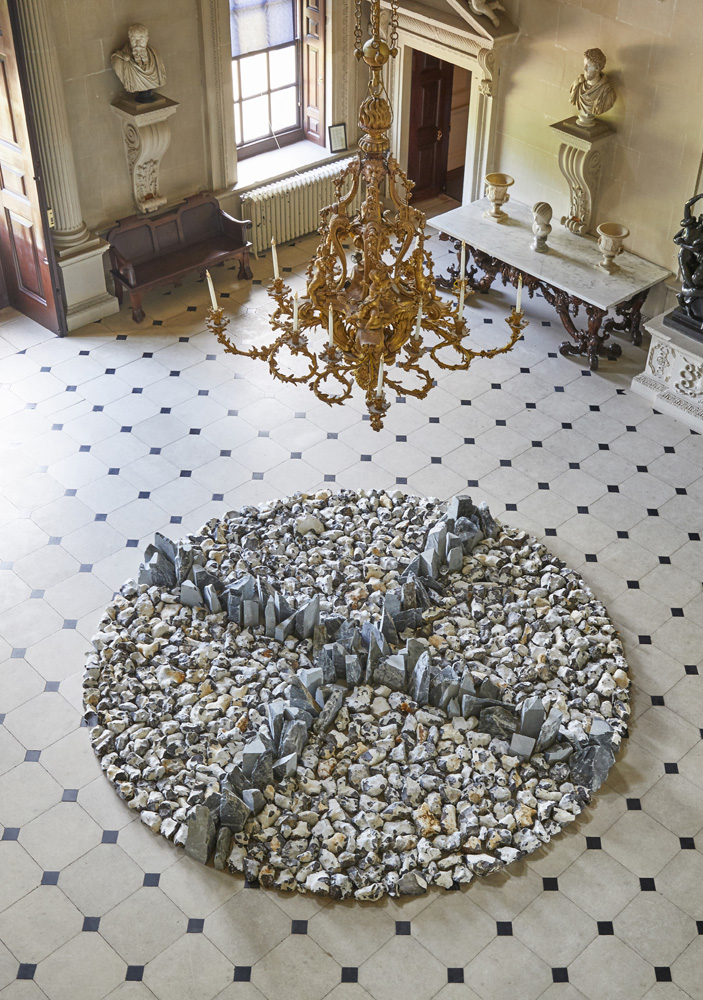
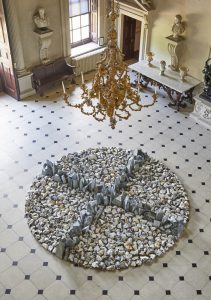
Another circle is found in North South East West in the Stone Hall. Here we find within a circle of flint a Cornish slate cross that is found again in Houghton Cross located in the walled garden. In both crosses, the slate, rather than lain flat on the round, projects upwards toward the sky.

It is strange seeing North South East West indoors in an environment also made of stone but one elaborate in its design, with carvings from floor to stuccoed ceiling. It seems contrived and pompous next to the natural shapes of the stones within a circle that the organic softness of the flint and the hard roughness of the slate share.

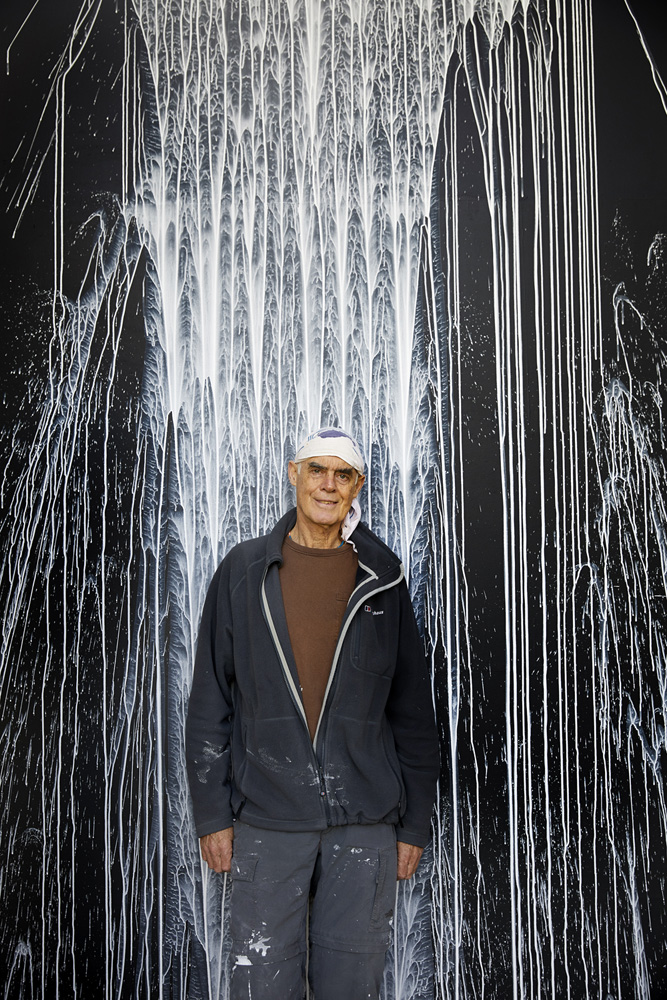
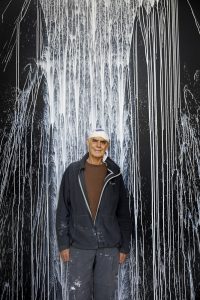
The White Water Falls in the colonnades are as true to their name as Full Moon Circle. These mud drawings are executed with extreme concentration. Long likens the action to that of a musician playing a live concert. There is only one chance to get it right. For him, in the end it is purely chance that determines the results once the bucket of mud is thrown. The white on black is at times bold and forceful and at other times intricately beautiful.
Richard Long March 2017
Photography: Peter Huggins

In the South Wing Gallery I realize how extensively Richard Long has walked in his lifetime and how integral walking is to his life and art. Large scale photographs document walks and works created on the way either by placing rocks in a circle or a line; sometimes throwing them to create marks on the landscape. Each work created is relevant to the location.

Seeing the photos and reading the words also impress through the idea of the experience of walking done. This is not just a casual walk on the beach or 108 steps. It’s an involvement with the elements and essence of the place. A winter walk in England, Tibet or Antarctica contrasting with the heat of Mexico, the Sahara or South Africa as extremes of the spectrum.

The text works are a concise and aesthetic observation of detail withevery word conjuring an image, vivid, alive.

The second gallery located in the house surprises with smaller wall works. Found pieces of wood are utilized in the shape found, perhaps cut at one time or another, sometimes worn, aged, irregular, or with rust stains where a steel band used to be. These works make a welcome contrast and show another aspect of Long’s work. There is something ritualistic and primal about the methodical daubing with mud on these pieces.
White Deer Circle, 2017
Photography: Peter Huggins

The exhibition is rounded off with display cases presenting catalogues, documentation and other publications by and about Richard Long giving an extensive documentation of his career.

Esther Boehm

The exhibition runs until 26 October 2017.
For opening times and more information  visit the Houghton Hall website.